Give every project, goal, and team its own memory
Memory now has layers. A lesson belongs to one agent, project, goal, team, or the whole workspace, and each run receives the notes that apply to its work. A pricing decision made on the Launch project stays with Launch, while a habit like "check the owning source before drawing a conclusion" follows the agent everywhere. We built it because one notebook per agent mixed project decisions with working habits, so a correction on one project leaked into unrelated work and workspace-wide rules lived in a single agent's head.
Notes live where the work lives
Agents, Projects, Goals, and Teams each have a Memories page, and workspace memory sits in settings. A Goal's notes might say the autumn launch excludes pricing changes, and a Team's notes might say release reviews stay with Delivery until another Team accepts ownership. A task draws on its project, goal, and routing team, Chat uses the agent's and workspace's notes, and a team lead draws on the teams and goals it leads. Access is checked before notes are selected, and each run records the exact note versions it received.
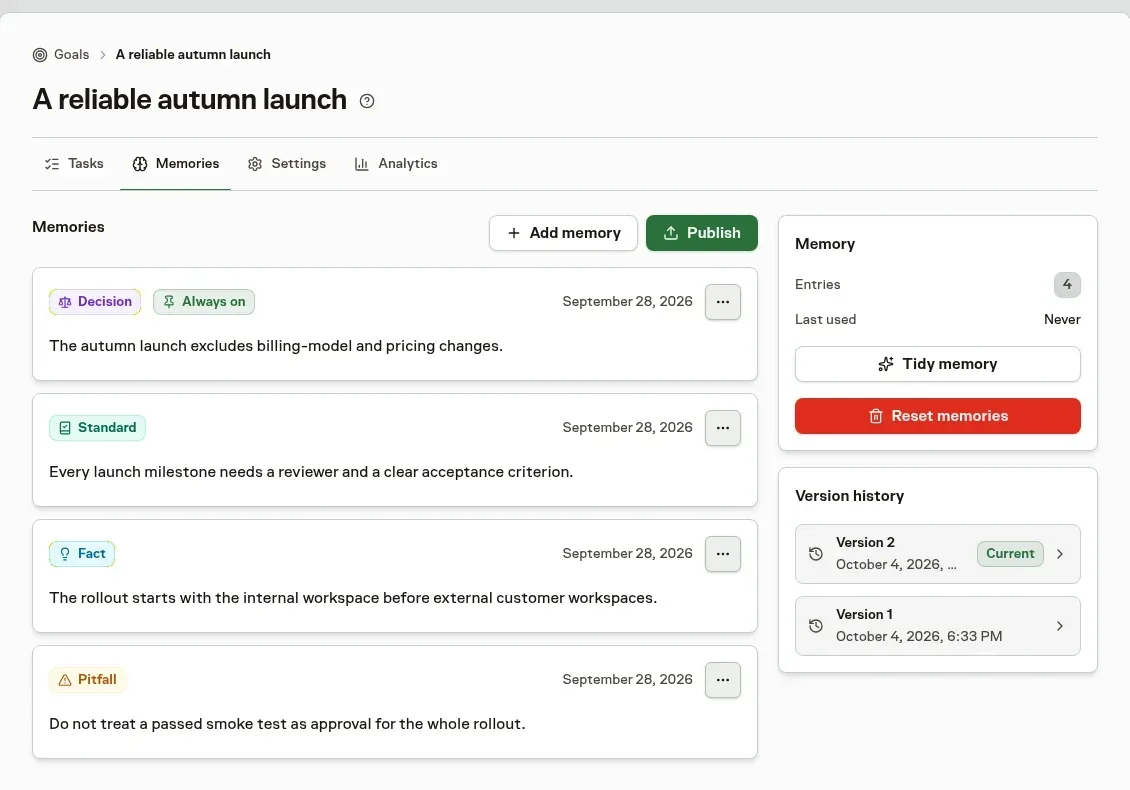
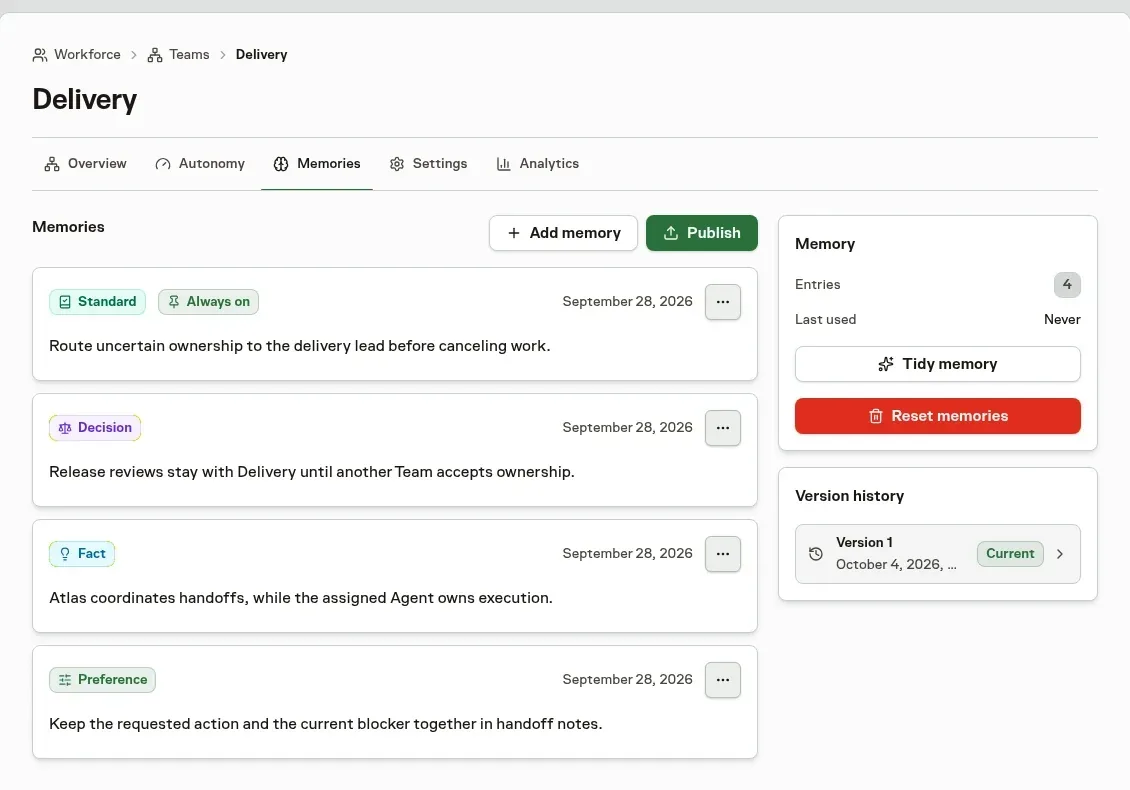
Notes carry a kind, a date, and a reason
Each note is one short entry marked as a decision, standard, fact, pitfall, or preference. Mark a note Always on so it reaches every applicable run, and give a fact an expiry date when it stops being true, such as a promotion that ends on November 1. Other notes are chosen per run by relevance, and older facts rank below newer evidence. Select View evidence on any change to see the task, comment, or Inbox decision behind it, with the exact words added and removed.
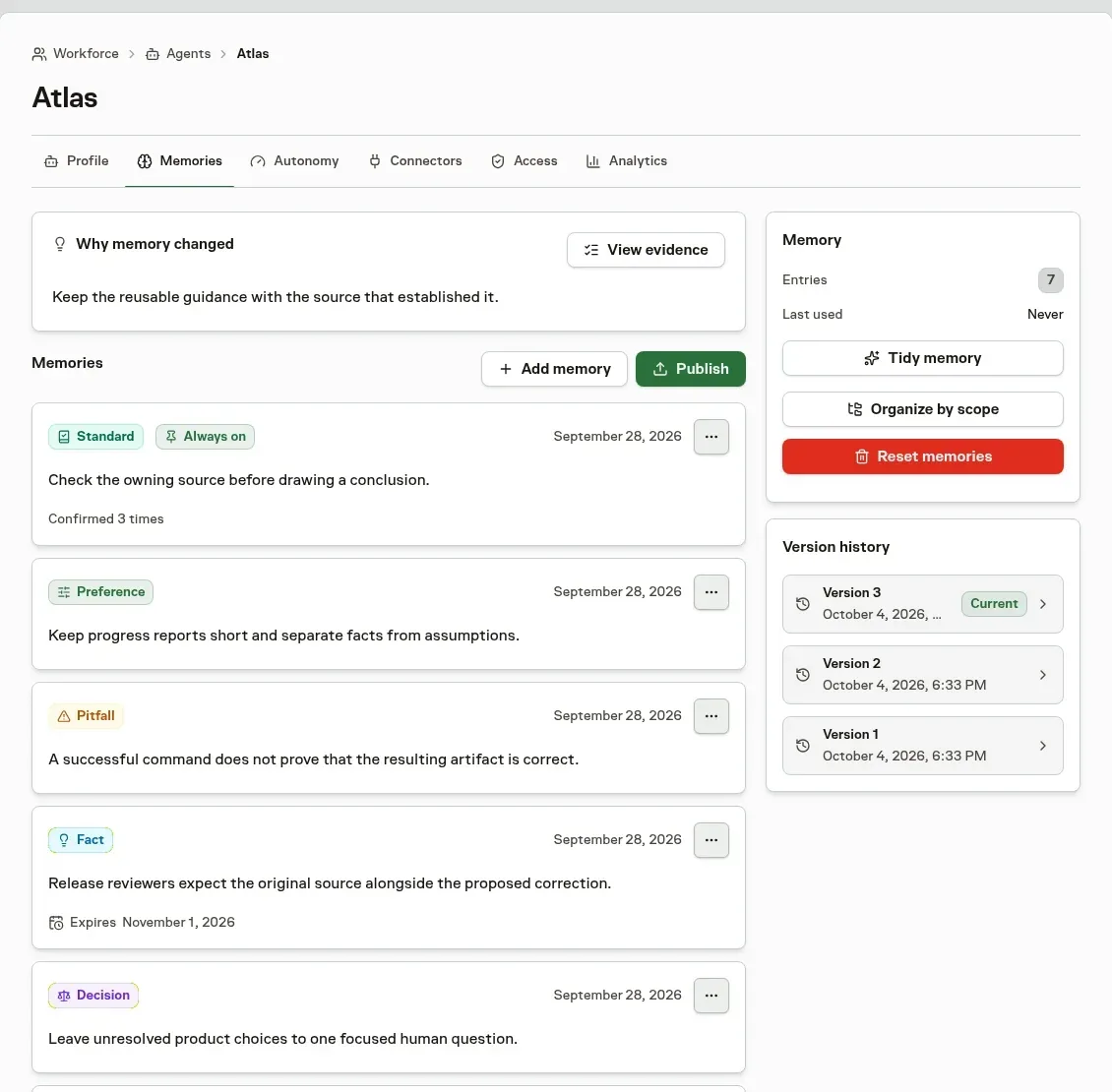
Agents can curate their own notes
Agents with Manage memory add, update, replace, and archive their own notes as they work, and every change keeps its history so you can restore an earlier version. Suggestions for shared notes wait for background learning to adopt them. Tidy memory proposes a shorter set of notes for you to accept or discard, and Organize by scope moves older agent notes into the project, goal, or team they belong to. An agent can now remember as many notes as it needs.
See Memory for permissions and the review flow.