Teams can earn routing autonomy
Teams can now apply selected routing decisions automatically while keeping higher-risk choices under review. Task Machine learns from reviewed outcomes, proposes changes to each Team’s autonomy in the Inbox, and shows whether that trust is working over time. We built it because routine routing decisions kept waiting for review even after a Team had handled them well many times.
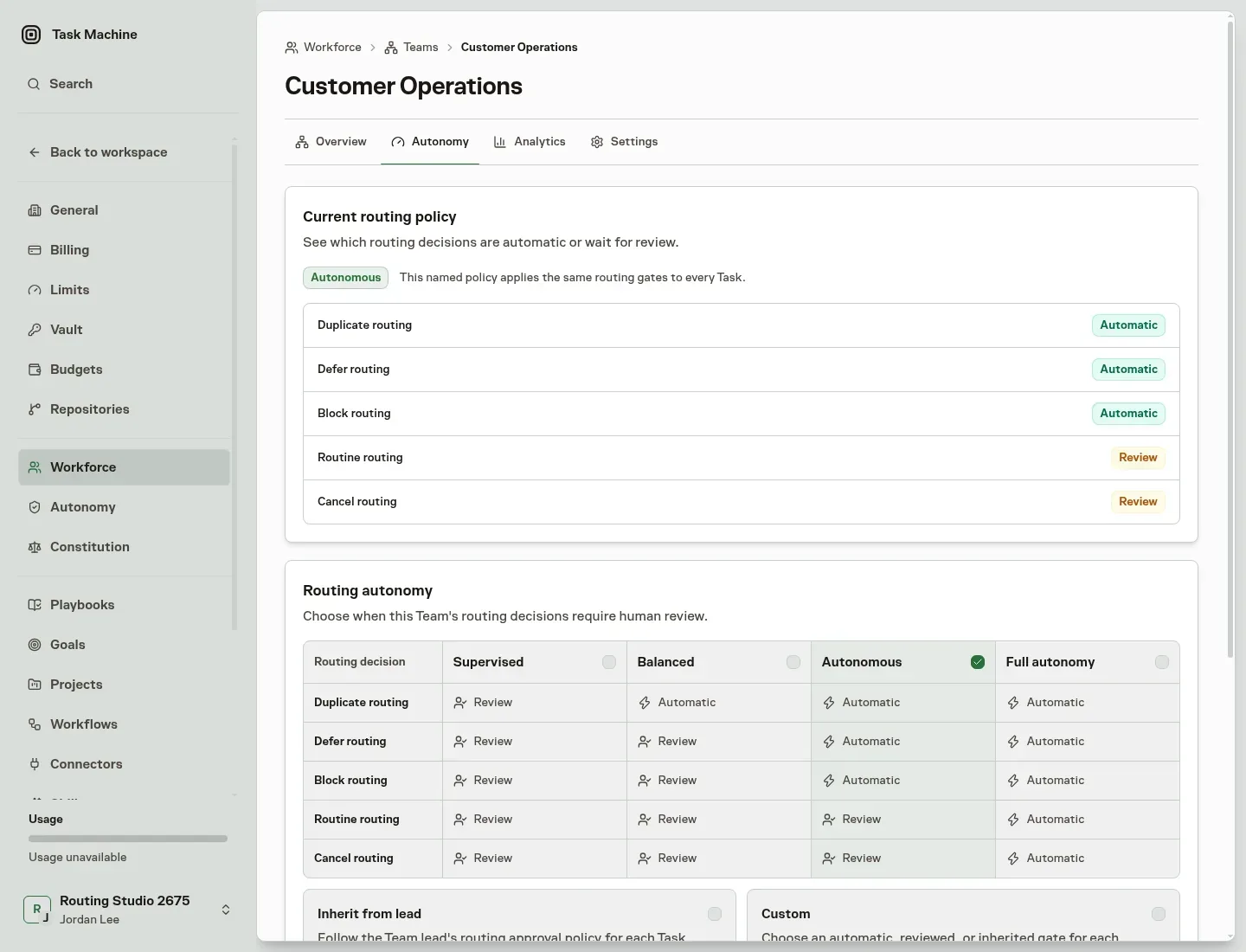
Choose how closely each Team’s routing should be supervised. Built-in levels progressively allow duplicate, defer, block, routine, and cancellation decisions to be handled automatically, while Custom lets you decide each one separately.
The policy belongs to the Team rather than its current lead, so replacing a lead does not reset the trust you have established. Routing decisions retain the policy that governed them, preserving a clear record of what happened.
Adjust trust from reviewed outcomes
Every approved or corrected routing decision contributes evidence for that Team and decision type. When the evidence supports a change, Task Machine proposes moving the Team one autonomy level up or down.
The proposal arrives in the Inbox with the relevant evidence and remains a human decision. Applying it publishes a new Team policy. Dismissing it leaves the current policy unchanged. Task Machine never changes a Team’s autonomy silently.
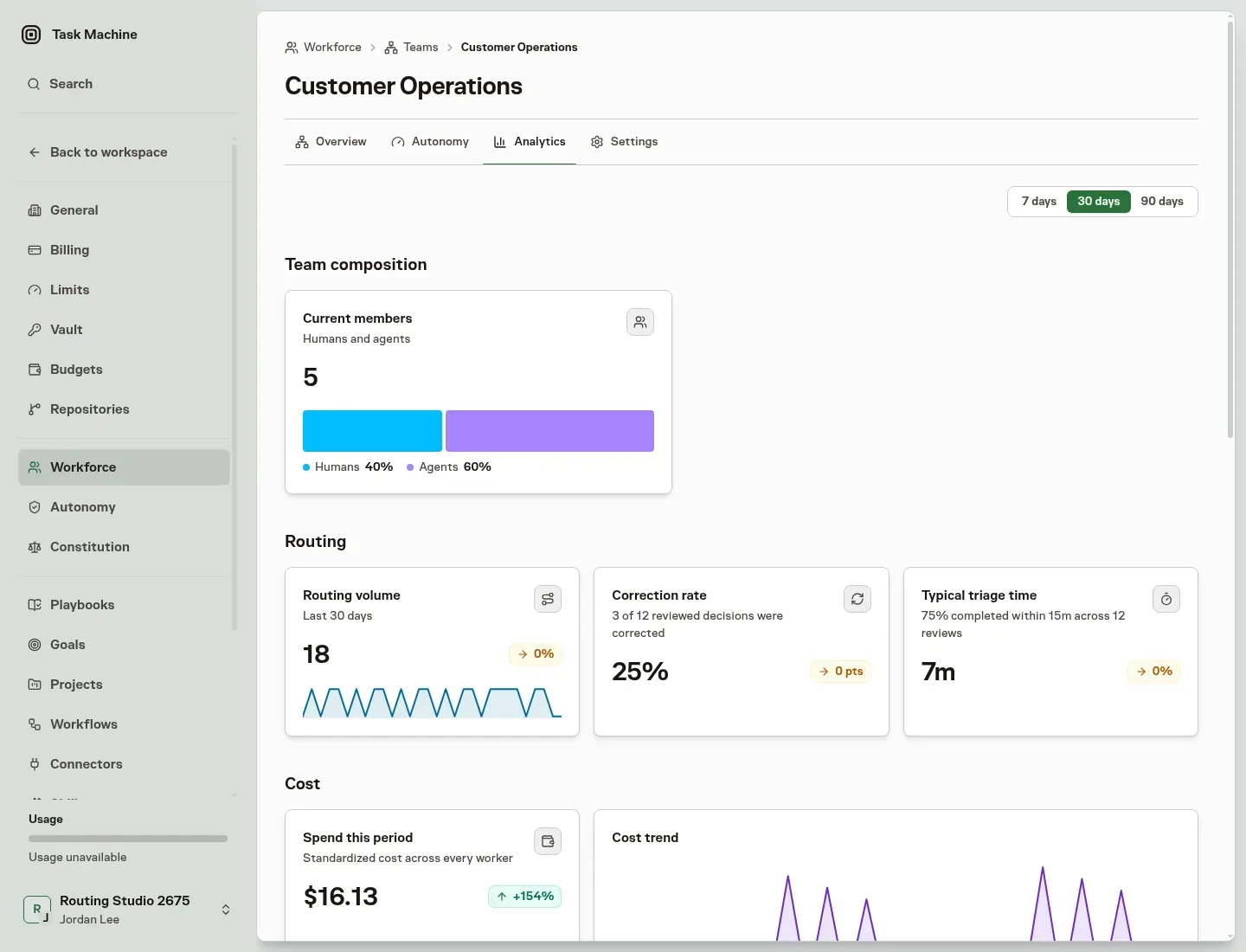
See whether autonomy is working
The Team Analytics page separates current composition from routing performance and execution usage. Compare routing volume, corrections, and triage time across trailing 7, 30, or 90-day periods.
People with budget access can also review cost, tokens, and active time for work routed through the Team, with breakdowns across the Agents, Projects, Goals, Tasks, Workers, Stages, and Models involved. This makes it possible to increase autonomy while keeping review quality, spend, and execution time visible.