How to Automate Backend and API Development
A practical guide to delegating backend and API changes to an agent: contract-first tests, scoped implementation, and pull requests behind review.

Founder, Task Machine
Backend and API development is the work of building and changing the server side of a software product: the endpoints clients call, the validation and authorization behind them, the background jobs, and the integrations that connect one system to another. Most of it arrives as small, scoped requests. Add an endpoint, extend a response, wire up a webhook, handle a failure case that finally happened.
Each request is small, but the contract it touches is not. Every endpoint has clients that depend on its exact shape, and a change that ships without tests or review can break them without anyone noticing. A disciplined process pays off because every change, however small, lands tested, reviewable, and inside the patterns the codebase already has.
Why small API requests wait behind big projects
Backend work has a queueing problem. The person who knows the codebase best is usually the person with the least spare time, so small API requests wait behind bigger projects. When they finally ship, they ship in a hurry: no test for the failure case, a new pattern bolted on next to an existing one, a response shape nobody wrote down.
The cost shows up later and somewhere else. A client breaks because a field changed. An integration retries forever because an error case was never handled. A second implementation of the same concern appears because the first was hard to find. None of these announce themselves at ship time, which is why the process as a whole needs an owner.
What the manual process looks like
Done properly by hand, a backend change is a five-step ritual:
- Read the local conventions: routing, the domain layer, persistence, tests, configuration, and error handling, plus the closest existing implementation of something similar.
- Define the external contract before writing code: request and response shape, authorization, validation, side effects, idempotency, and failure cases.
- Add or update tests at the public seam, covering the happy path, the most important invalid input, authorization, and downstream failure behavior.
- Implement the smallest change that satisfies the contract, keeping schema migrations, large refactors, and unrelated cleanup out of scope.
- Run the project's documented checks and open a pull request that names the contract, the tests, and any operational concerns.
Every skipped step is invisible at first. The ritual rewards consistency, and consistency is exactly what disappears when a change gets squeezed in between two other commitments.
What an agent can automate
Each step of that ritual is teachable, which makes the loop a good fit for an agent working in your repository:
- Read the codebase first. The agent maps the routing, domain, persistence, test, and configuration conventions and finds the closest existing implementation, so the change lands inside the patterns the repository already has instead of introducing a parallel one.
- Define the contract before the code. Request and response shape, authorization, validation, side effects, idempotency, and failure cases get written down before any production code moves.
- Test the public seam before implementing. Tests for the happy path, the most important invalid input, authorization, and downstream failure behavior go in first, so the contract is pinned before the change exists.
- Implement the smallest safe change. The agent satisfies the contract and nothing more. Schema migrations, large refactors, and unrelated cleanup stay out of scope unless you approve them.
- Run the checks and draft the pull request. The documented test, typecheck, lint, or build commands run, and the draft names the contract, the behavior covered, the tests run, and any deployment or rollback notes.
What stays with you is the judgment: deciding what to build, approving anything that would widen the scope, and reviewing the pull request before it goes anywhere.
The guardrails that make it safe
The most important line is drawn at merge. The agent drafts pull requests and never merges or deploys on its own, so nothing reaches production without a person reading the change first.
Scope is the second guardrail. Database schema changes, broad architecture changes, and dependency additions are out of bounds by default. When a change needs one, the agent stops and asks instead of deciding for you, so the risky categories of change always carry an explicit human yes.
The third guardrail is a fixed review bar built into the method: inputs are validated, authorization is enforced at the domain boundary, secrets and URLs come from configuration, database access follows the existing data layer, external calls have explicit error handling, and logs never expose sensitive data. The bar applies to every change, including the ones that look safe.
Set it up in Task Machine
The Backend and API development playbook provides a starting point for the method above. You need an active Task Machine workspace with Chat, workspace-management and Playbook-installation access (workspace owners have it). The agent also needs a connected code repository and the project's test, typecheck, lint, or build commands documented, so it can prove the API contract still works.
1. Find the playbook
Open Search in your workspace and enter "Backend and API development". The command center lists Set up Backend and API development under Playbook setup.
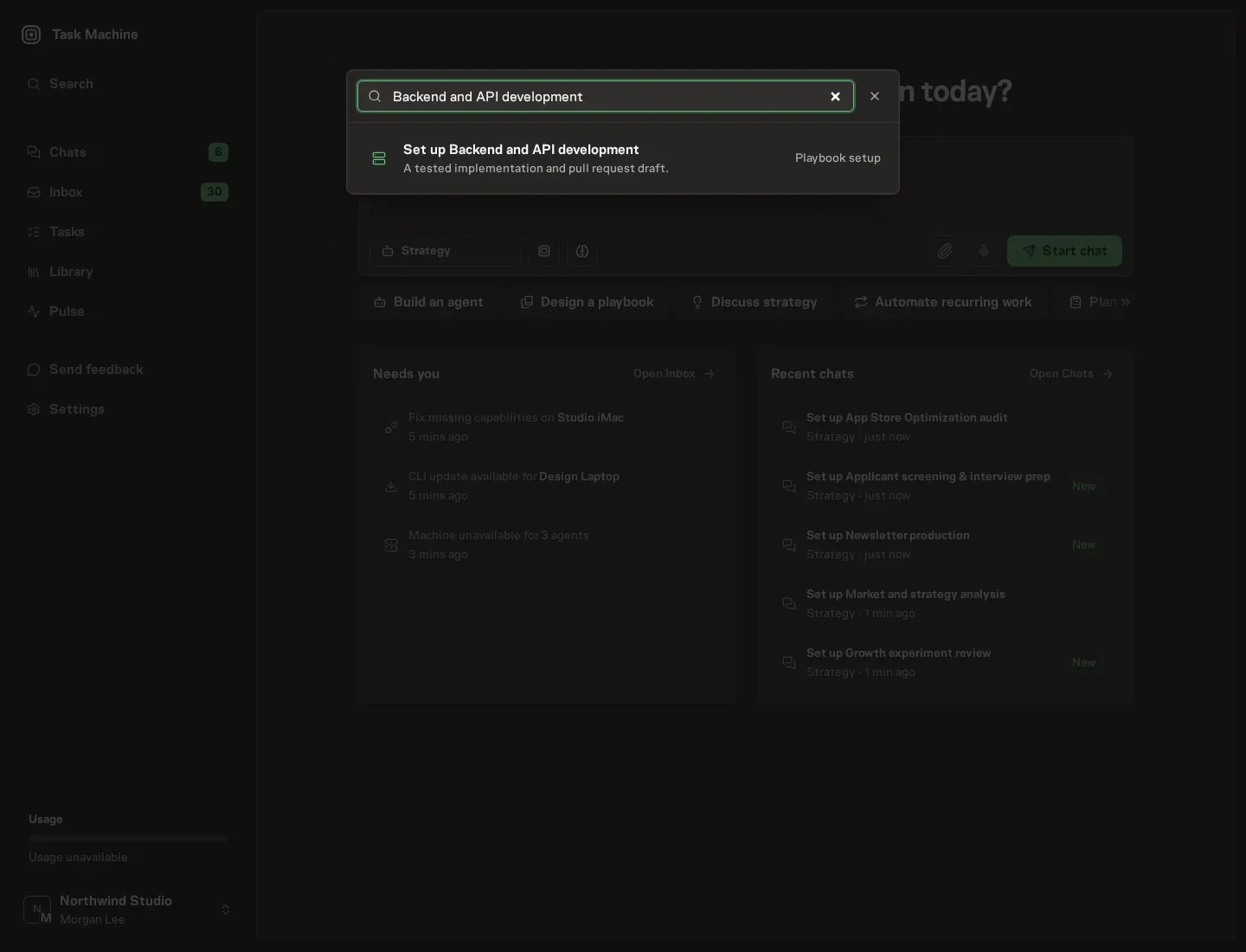
2. Start the conversation
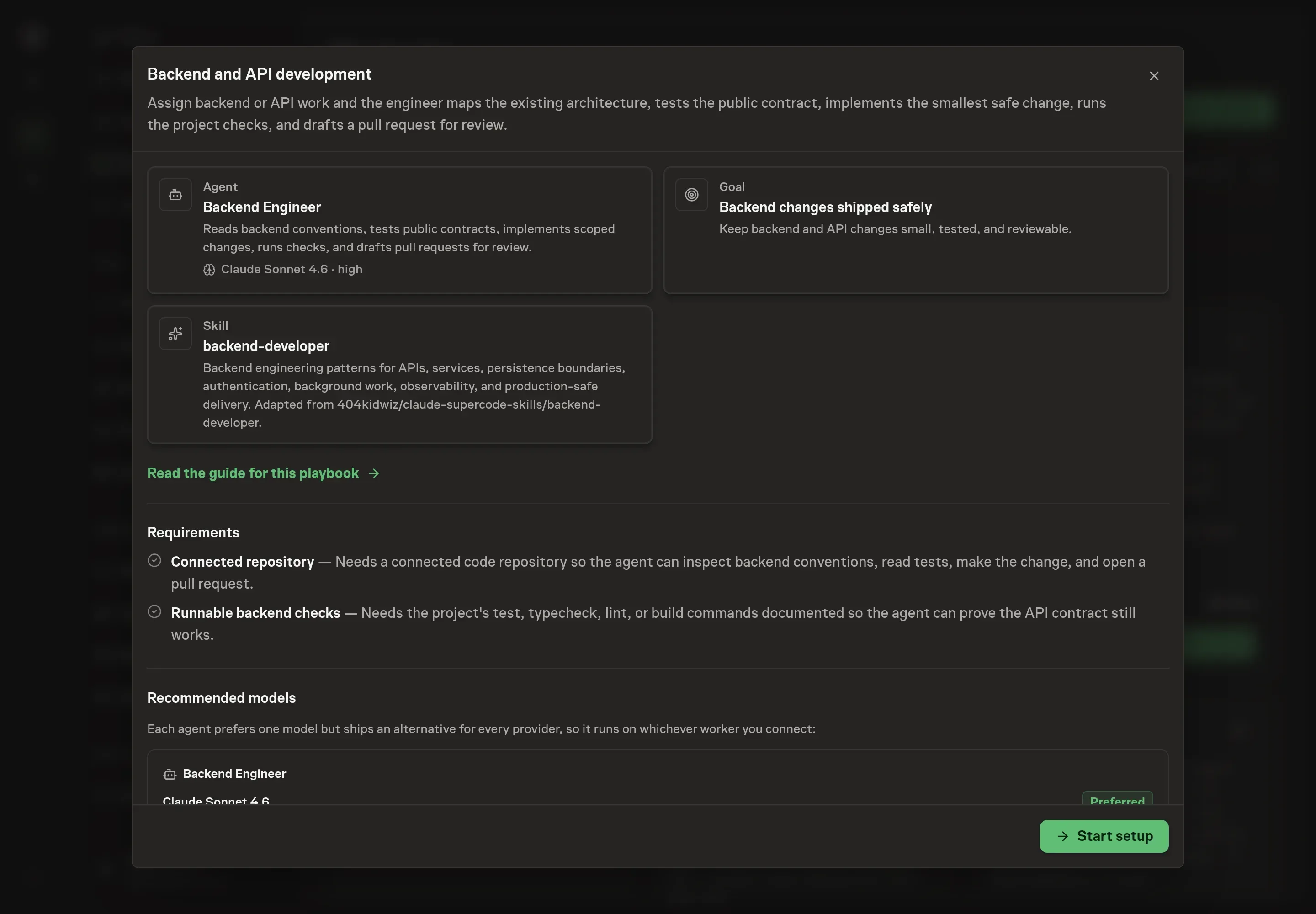
Choose Set up Backend and API development. Task Machine opens a dedicated Chat with the Playbook card and an editable, unsent request. Read the intended job and outcome. Add your situation and send it when ready. Opening the draft does not install anything or start work. This walkthrough uses settings that require approval of the proposed Playbook.
3. Agree the working brief
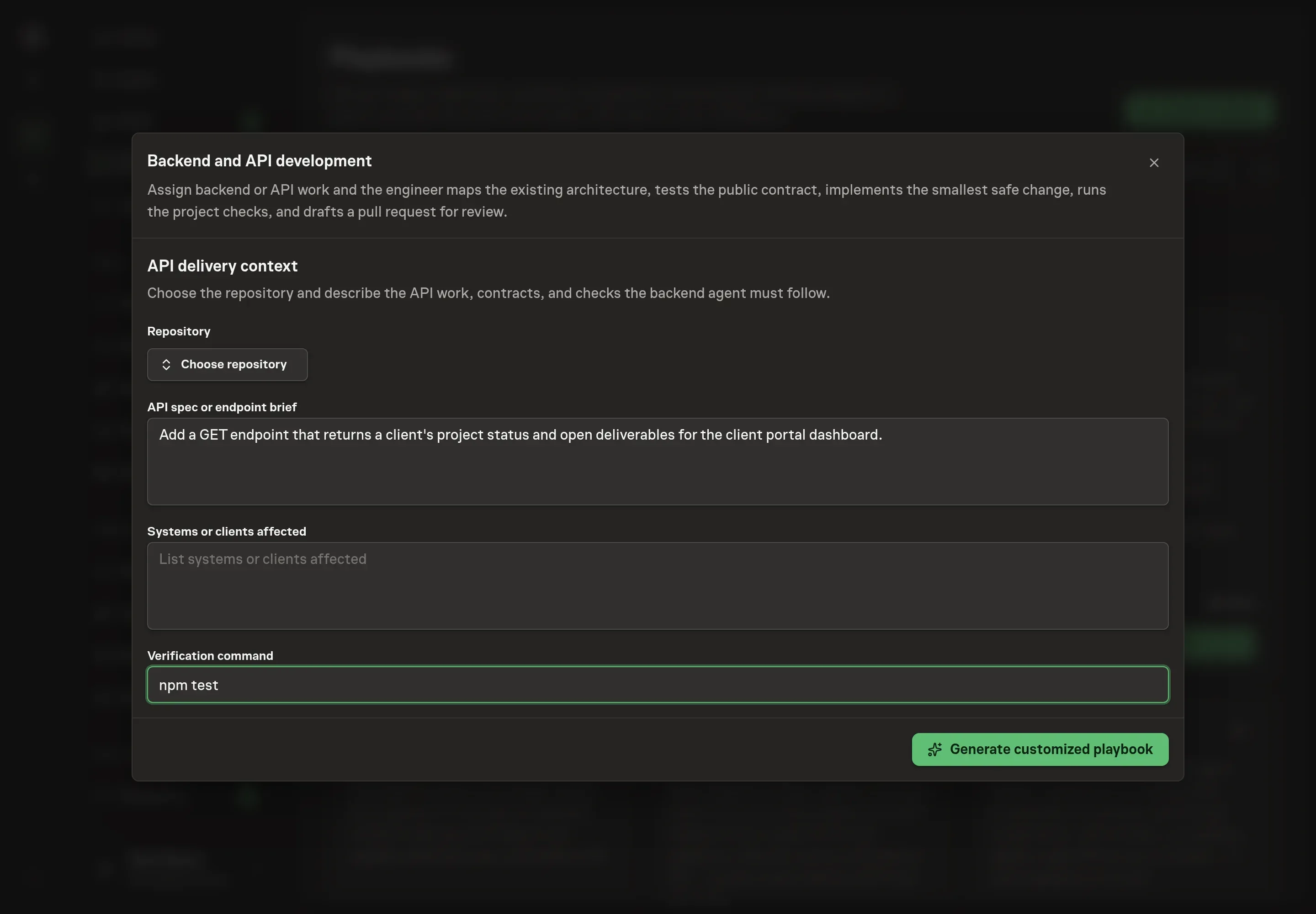
Use Chat to agree the inputs, expected output and limits before asking for a proposal. The Agent needs the delivery context that shapes the agent's assignments. Repository identifies the codebase the agent works in. API spec or endpoint brief describes the change you want: the endpoint, integration, or service behavior. Systems or clients affected lists the integration points the change must not break. Verification command names the command that proves the contract still works after the change.
4. Review the proposed Playbook
Ask the Agent to generate the Playbook from the agreed brief. Open its proposal in Chat and check the instructions and resources it will install, which carry more detail than the conversational summary. Read the agent card, confirm the brief and the affected systems match what you meant, and check that the verification command is the one your project runs. Ask for a revised proposal if anything is missing or changes the job.
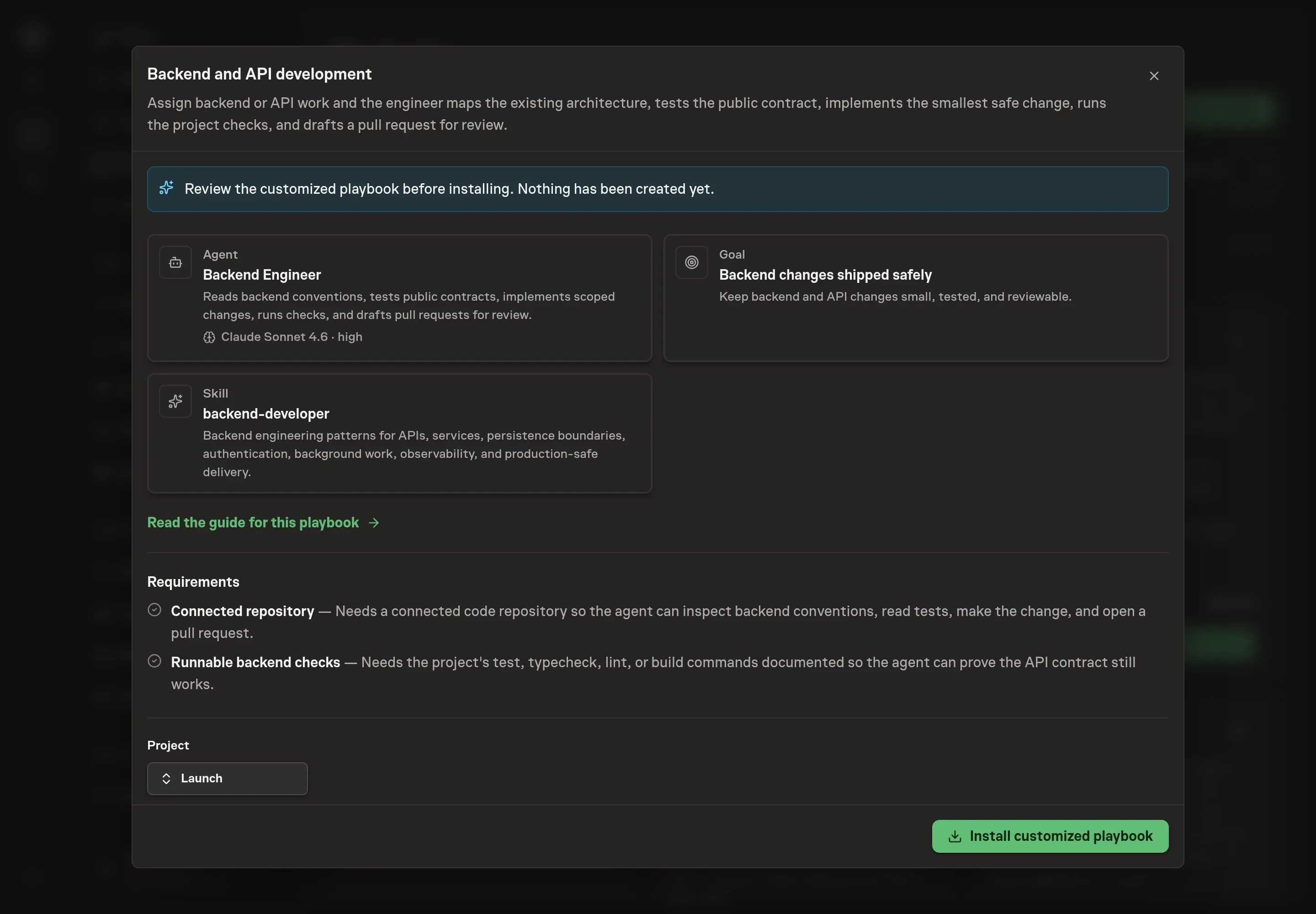
5. Approve and prepare the first work
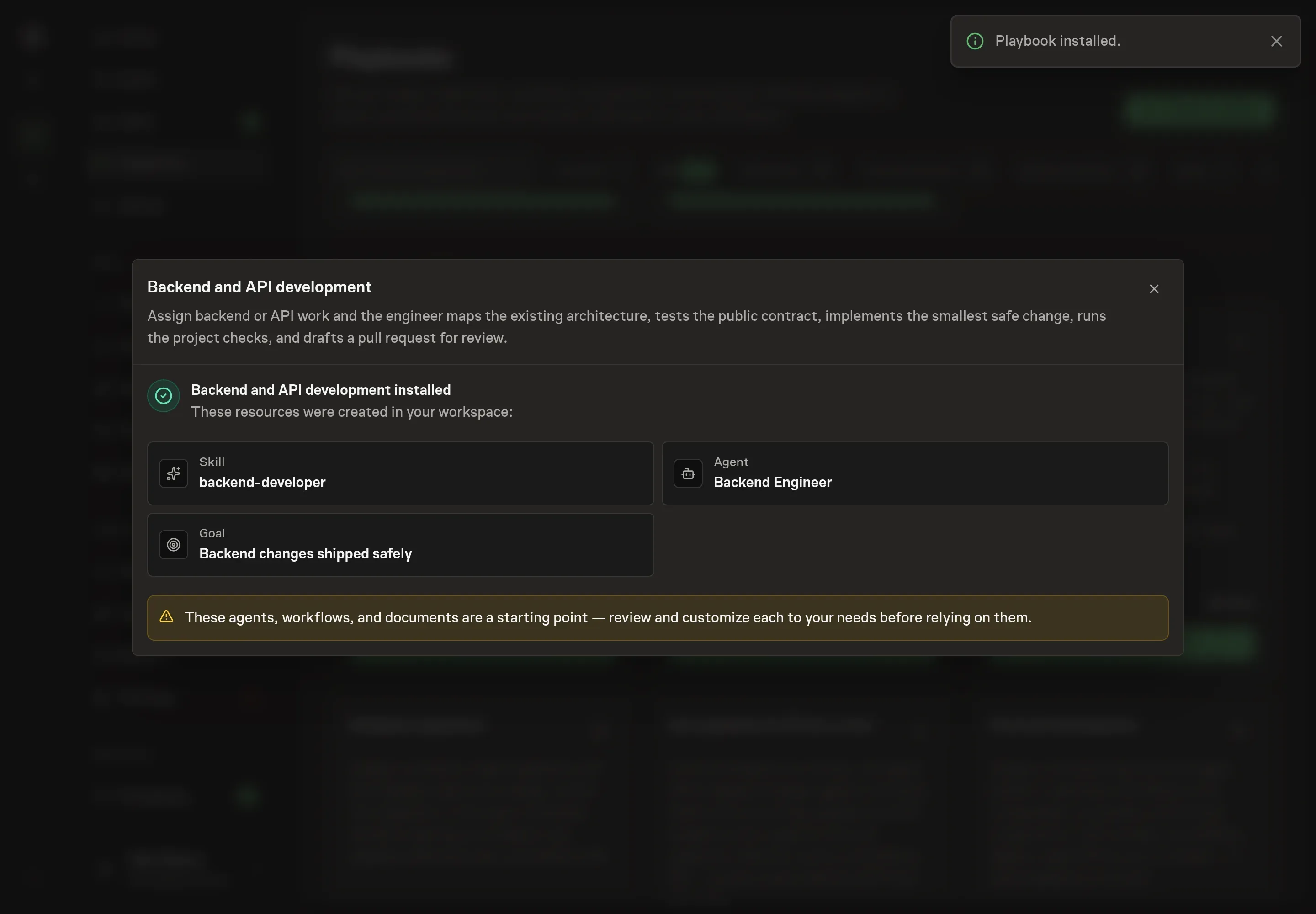
Choose Approve on the proposal in Chat when the configuration matches your brief. Task Machine installs that reviewed configuration. The approved item retains its review details. If your autonomy settings allow direct installation, this approval may not be required. Check the resulting configuration in that case too.
Complete any remaining secure service setup from the installation details in Chat. Inbox keeps those setup items available if you return later. Prepare the source documents and inputs before starting the first Task or Workflow. Installation does not authorize sending, publishing or changing an external service beyond the boundaries you agreed.
What good looks like
Three signals tell you whether the process works:
- Every change reaches you as a reviewable pull request. The draft names the contract, the tests run, and any deployment or rollback notes, so review starts from context instead of archaeology.
- Error cases have tests before you ask for them. The public seam covers the most important invalid input, authorization, and downstream failure behavior as well as the happy path.
- Scope holds. Diffs stay small, schema and dependency changes appear only when you approved them, and the codebase stops accumulating parallel patterns for the same concern.
Common questions
Can an agent work inside an existing codebase without making a mess? Yes, when the method forces it to read first. The agent maps the repository's conventions and the closest existing implementation before writing anything, and the review bar rejects changes that introduce a parallel pattern where one already exists.
Will the agent change the database schema? No. Schema migrations stay out of scope unless you explicitly approve them. Schema work is a different job with different risks, and keeping it separate is what lets API changes move quickly without touching the data layer's shape.
What happens when a change needs a new dependency or a bigger refactor? The agent stops and asks. Dependency additions, broad architecture changes, and large refactors need your approval before the agent touches them, so the categories of change most likely to surprise you always arrive as a question first.
Does the agent merge or deploy? Never. Every finished change is a draft pull request, and merging and deploying remain human actions. The agent's job ends where production begins.
What does the repository need before this works? Two things: a connected repository the agent can read and open pull requests against, and documented test, typecheck, lint, or build commands so the agent can prove the API contract still works after each change.