How to Automate a Referral and Co-Marketing Program
A practical guide to building referral loops and partner outreach with an agent, verified fit, and human approval.

Founder, Task Machine
Referral and co-marketing program work is the recurring process of turning customers, adjacent companies, and creators into repeatable growth channels. It means defining when a customer should be invited to refer, what reward makes sense, which partners share the same audience without competing, and what first campaign is small enough to test.
The work is worth systematizing because partner programs fail more often from neglect than from strategy. A team runs one campaign, forgets the follow-up, loses the partner notes, or launches a referral offer without abuse rules. The result is a channel that stays anecdotal instead of becoming a monthly operating rhythm.
Why referral and co-marketing stall
The job looks creative from the outside, but most of the failure is operational. Nobody owns the partner list. Outreach talks about your offer instead of the partner's benefit. The referral prompt appears at a random moment instead of after the customer reaches a milestone. Rewards launch before eligibility rules, expiry, and verification are settled.
That creates two risks. The first is wasted attention: partners get generic pitches and customers get weak referral prompts. The second is program debt: a referral loop without caps, self-referral checks, and qualified-conversion rules can create support work and reward disputes.
What the manual process looks like
Run by hand, the program build is a monthly ritual:
- Identify the customer trigger moments that deserve a referral ask, such as first value, renewal, upgrade, or exceptional support.
- Decide whether the program is a customer referral loop, an affiliate motion, or both.
- Define the share mechanism, incentive, eligibility rules, caps, reward expiry, and verification.
- Source partner candidates from integrations, adjacent categories, shared communities, newsletters, podcasts, and conferences.
- Score each partner on audience fit, audience size, brand alignment, engagement quality, reciprocity, and ease of execution.
- Draft first-campaign outreach that starts with the partner's benefit and proposes a small test.
- Review the loop, the shortlist, and the outreach before anything launches.
Every step has judgment in it, but the assembly work is repetitive. The same scoring fields, guardrail checks, and first-campaign formats repeat every cycle.
What an agent can automate
An agent is useful here when it runs the same method every month and leaves the launch decision to a person:
- Design the referral loop. The agent names the right trigger moment, chooses referral, affiliate, or both, proposes the share mechanism, maps the reward to value created, and fills in caps, eligibility, expiry, and verification rules.
- Source partners with evidence. The agent searches integration ecosystems, adjacent categories, and community signals. It should cite the evidence behind audience overlap instead of treating a familiar logo as a fit.
- Score fit before reach. The partner list gets scored on fit, brand alignment, engagement, reciprocity, and execution ease. A smaller partner with the same buyer and a clear mutual benefit can beat a large audience that will not act.
- Draft benefit-first outreach. The agent writes outreach around what the partner gets from the campaign: a case study, useful content for their audience, a low-effort joint offer, or a better answer to a shared customer moment.
- Verify before approval. A second pass checks that every partner has evidenced audience overlap, every outreach draft leads with the partner's benefit, and the referral loop has complete guardrails and metrics.
The agent should not launch the offer, send partner email, or approve rewards. Those are business decisions.
The guardrails that make it safe
Referral and partner programs touch incentives, brand reputation, and external relationships. The safe setup makes the agent a researcher and drafter, not an unsupervised program owner.
The approval point sits after verification. You review the referral mechanics, the partner evidence, the outreach drafts, and any unclear reward or legal questions. The agent drops partners it cannot verify, asks when guardrails are ambiguous, and keeps the schedule visible so the program cadence does not turn into silent background work.
Set it up in Task Machine
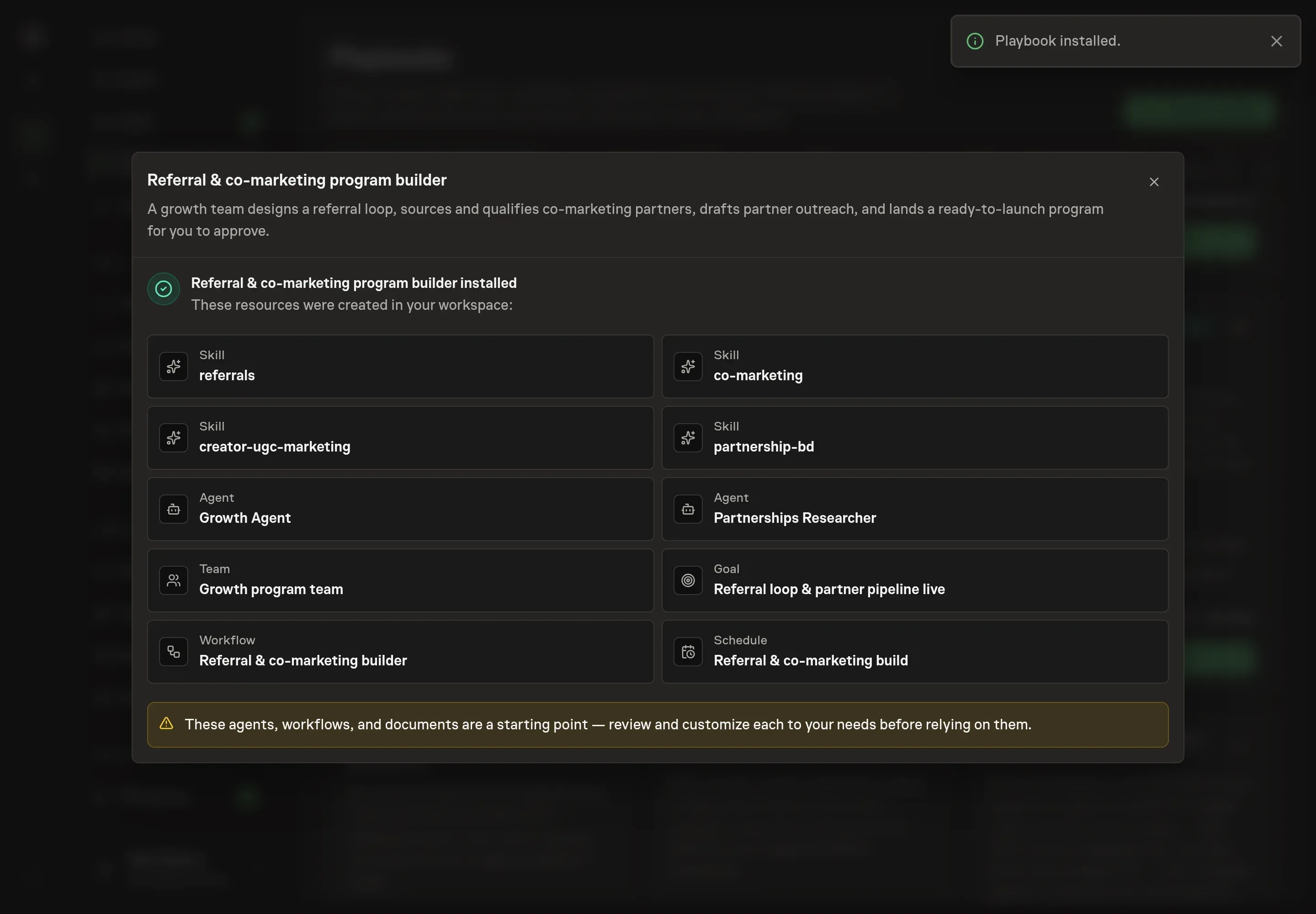
The Referral & co-marketing planning playbook provides a starting point for the method above. You need an active Task Machine workspace with Chat, workspace-management and Playbook-installation access (workspace owners have it). The playbook works before any outside service is authorized because it can use web research and the setup context you provide.
1. Find the playbook
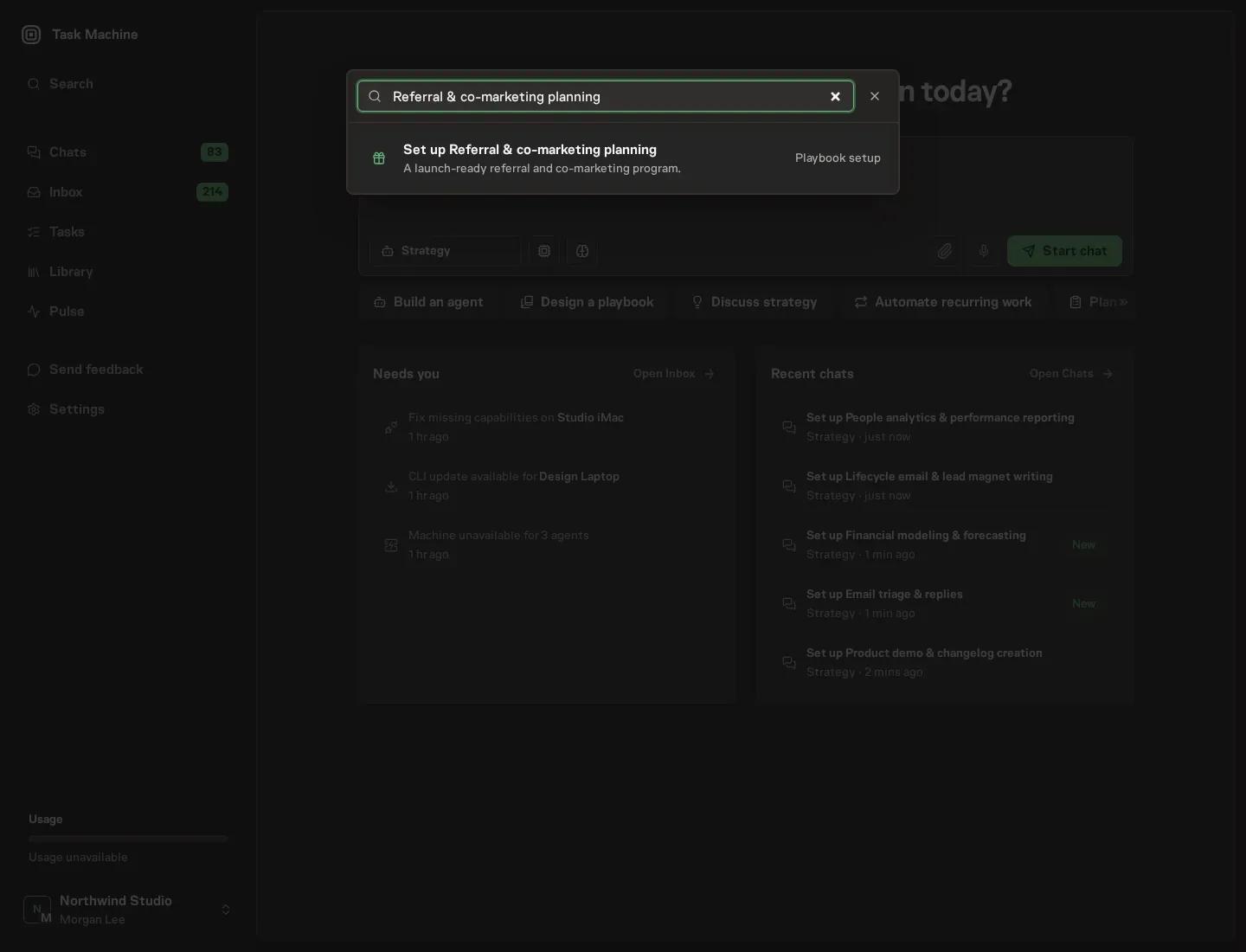
Open Search in your workspace and enter "Referral & co-marketing planning". The command center lists Set up Referral & co-marketing planning under Playbook setup.
2. Start the conversation
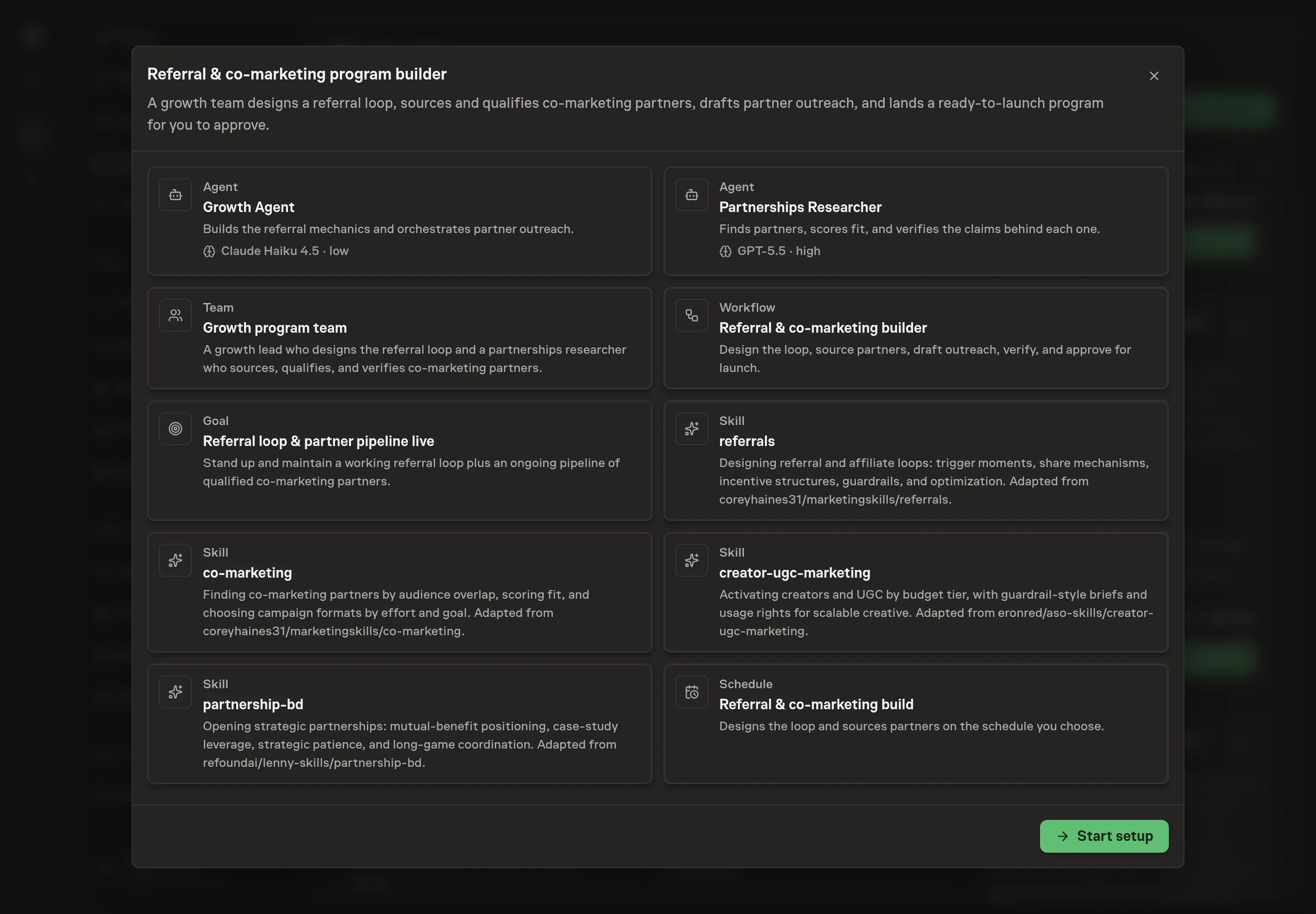
Choose Set up Referral & co-marketing planning. Task Machine opens a dedicated Chat with the Playbook card and an editable, unsent request. Read the intended job and outcome. Add your situation and send it when ready. Opening the draft does not install anything or start work. This walkthrough uses settings that require approval of the proposed Playbook.
3. Agree the working brief
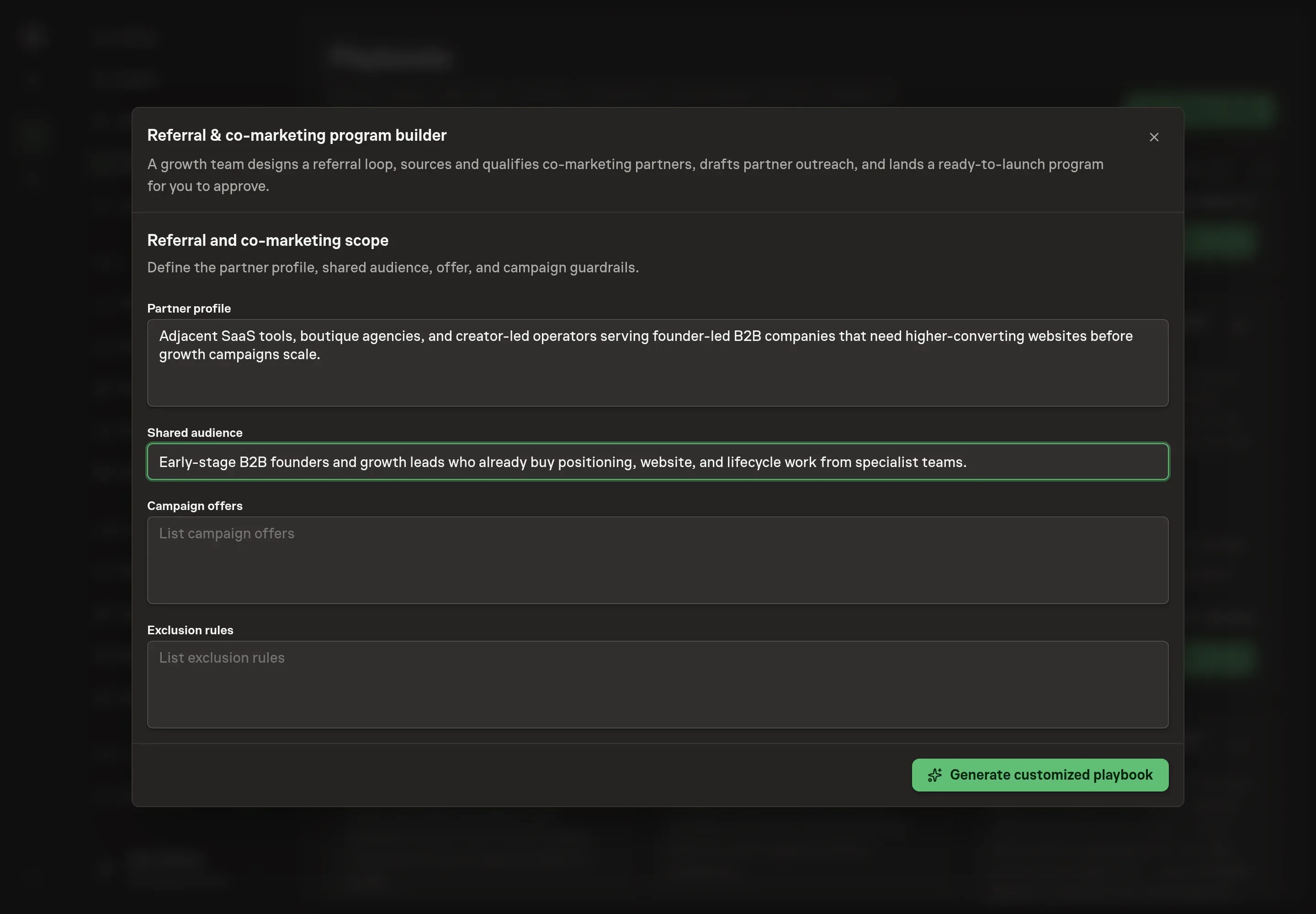
Use Chat to agree the inputs, expected output and limits before asking for a proposal. Discuss the partner profile, shared audience, campaign offers, and exclusion rules. For Northwind Studio, the scope might target agencies and SaaS tools serving early-stage B2B founders, offer a joint audit or webinar, and exclude direct competitors or partners that sell list scraping.
4. Review the proposed Playbook
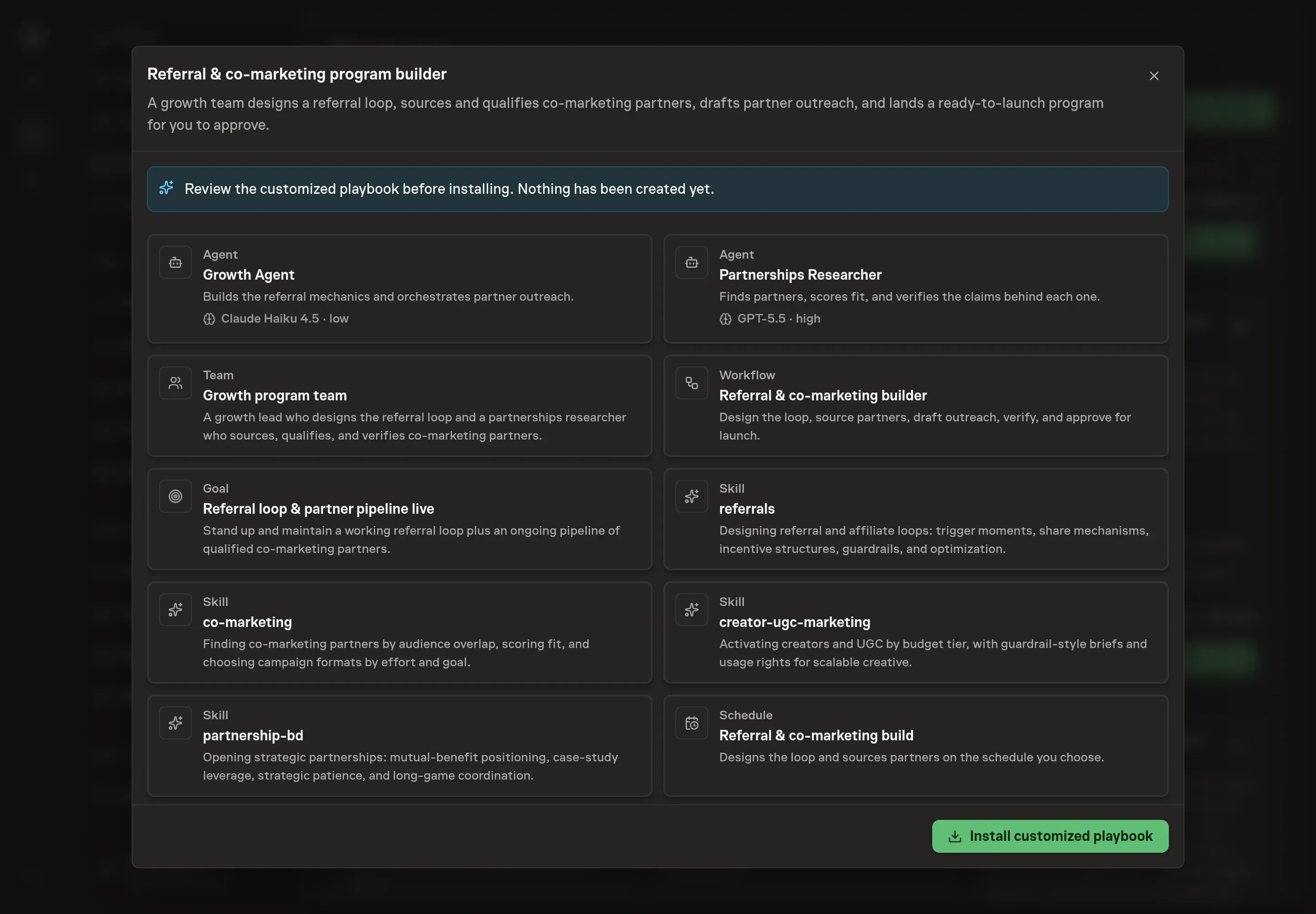
Ask the Agent to generate the Playbook from the agreed brief. Open its proposal in Chat and check the instructions and resources it will install, which carry more detail than the conversational summary. Review the generated playbook for the specific referral guardrails, partner scoring method, and outreach approval step. Ask for a revised proposal if anything is missing or changes the job.
5. Approve and prepare the first work
Choose Approve on the proposal in Chat when the configuration matches your brief. Task Machine installs that reviewed configuration. The approved item retains its review details. If your autonomy settings allow direct installation, this approval may not be required. Check the resulting configuration in that case too.
Complete any remaining secure service setup from the installation details in Chat. Inbox keeps those setup items available if you return later. Prepare the source documents and inputs before starting the first Task or Workflow. Installation does not authorize sending, publishing or changing an external service beyond the boundaries you agreed. Confirm each schedule's cadence and timezone, and resolve any pending schedule setup before it starts. A readback must wait for its agreed observation window and source data.
What good looks like
Track the program as a channel with a quality bar, not a pile of contacts:
- Verified partner rate. A healthy run drops weak candidates and leaves a shortlist where audience overlap and reciprocity are evidenced.
- First-campaign approval rate. Most approved campaigns should be low-effort tests such as a newsletter swap, co-authored post, podcast exchange, or joint webinar.
- Referral loop completeness. The loop is not launch-ready until trigger, share mechanism, incentive, eligibility, caps, expiry, verification, and metrics are all named.
Common questions
Should a referral program and co-marketing program be built together? They share the same growth question: who already has trust with the audience you want to reach? Building them together keeps the offer, audience, and guardrails consistent.
Should the agent choose big-name partners first? No. The bundle prioritizes audience fit and reciprocity over raw reach. A big partner with no mutual benefit is usually slower and weaker than an adjacent partner with a clear first campaign.
Can the agent send partner outreach automatically? No. The workflow drafts and verifies outreach, then waits for human approval. Partner relationships are high-context, and the final send should stay with a person.
What should be excluded from the program? Exclude direct competitors, partners with weak audience evidence, companies with mismatched brand standards, and any offer that would train customers to abuse rewards.