How to Build Pricing and Offer Strategy
A practical guide to value-based pricing, offer structure, margin checks, willingness-to-pay tests, and approval.

Founder, Task Machine
Pricing and offer strategy is the work of deciding what customers pay for, how packages are structured, what value metric scales with usage, and how the offer reduces risk for the buyer without damaging the business. The output should be a recommendation a human can approve and test, not a permanent price carved into the business.
This job is worth treating as recurring work because pricing gets stale. Products add value, costs move, competitors change, and customer willingness to pay shifts. A pricing review gives the team a disciplined way to move one lever, check the floor, and validate the result.
Pricing mistakes hide inside normal growth work
Pricing mistakes hide inside normal growth work. A team adds features without moving the value metric. A self-serve product keeps a checkout price above the level where cards start getting flagged. Discounts become a private habit rather than a documented guardrail. A services offer gets more complex while the buyer's risk stays unchanged.
The common failure is changing too much at once. If packaging, metric, price point, guarantee, and payment terms all change together, nobody can tell what worked. Pricing needs a testable recommendation, not a pile of preferences.
What the manual process looks like
Done by hand, a pricing and offer review has a clear sequence:
- Gather the current product or service, customer segment, current prices, packaging, costs, margins, and willingness-to-pay signals.
- Decide which pricing axis is under review: packaging, value metric, or price point.
- Compare value delivered, next-best alternatives, cost to serve, and competitor pricing.
- Design tiers or packages that map to real personas and clear the margin target.
- Build the offer anatomy: core deliverable, bonuses, guarantee, scarcity, name, and payment terms.
- Draft a validation plan such as Van Westendorp, MaxDiff, pricing-page test, pilot, or grandfathered increase.
- Review the recommendation before changing live pricing or offers.
The work combines numbers and judgment. Cost is the floor. Perceived value and willingness to pay define the ceiling. The recommendation needs both.
What an agent can automate
The Pricing & offer strategist playbook turns that review into a repeatable workflow:
- Gather packaging context. The pricing strategist reads the cost basis document, current pricing, segment notes, attached willingness-to-pay signals, and web research when available.
- Move one axis. The agent names whether the recommendation changes packaging, value metric, or price point. That makes the test measurable.
- Floor-check the math. Every tier or package is checked against cost to serve, margin target, discount guardrails, and payback context.
- Build the offer. For services, courses, coaching, and high-ticket B2B, the agent checks the six-part offer anatomy and avoids fake scarcity or inflated bonus claims.
- Draft the validation plan. The recommendation includes a willingness-to-pay test with success metric, decision criteria, and a revisit date.
- Self-critique before approval. The agent checks whether the price is defended by value, whether every tier clears margin, whether the offer is complete, and whether the copy avoids banned vocabulary.
The playbook can research competitor pricing pages to anchor recommendations. If web research is not available, it works from the cost basis and flags what should be validated.
The guardrails that make it safe
Pricing changes affect revenue, trust, and customer expectations. The playbook never changes live pricing. It creates a recommendation, offer structure, and validation plan for review.
The approval step should challenge the recommendation as a business decision: which lever moved, what evidence supports it, whether margin is protected, whether the guarantee is survivable, and what result would cause the team to roll back or continue.
Set it up in Task Machine
The Pricing and offer strategy playbook provides a starting point for the method above. You need an active Task Machine workspace with Chat, workspace-management and Playbook-installation access (workspace owners have it). Web research helps with competitor anchors. Without it, the agent reasons from your cost basis, current pricing, and attached willingness-to-pay evidence.
1. Find the playbook
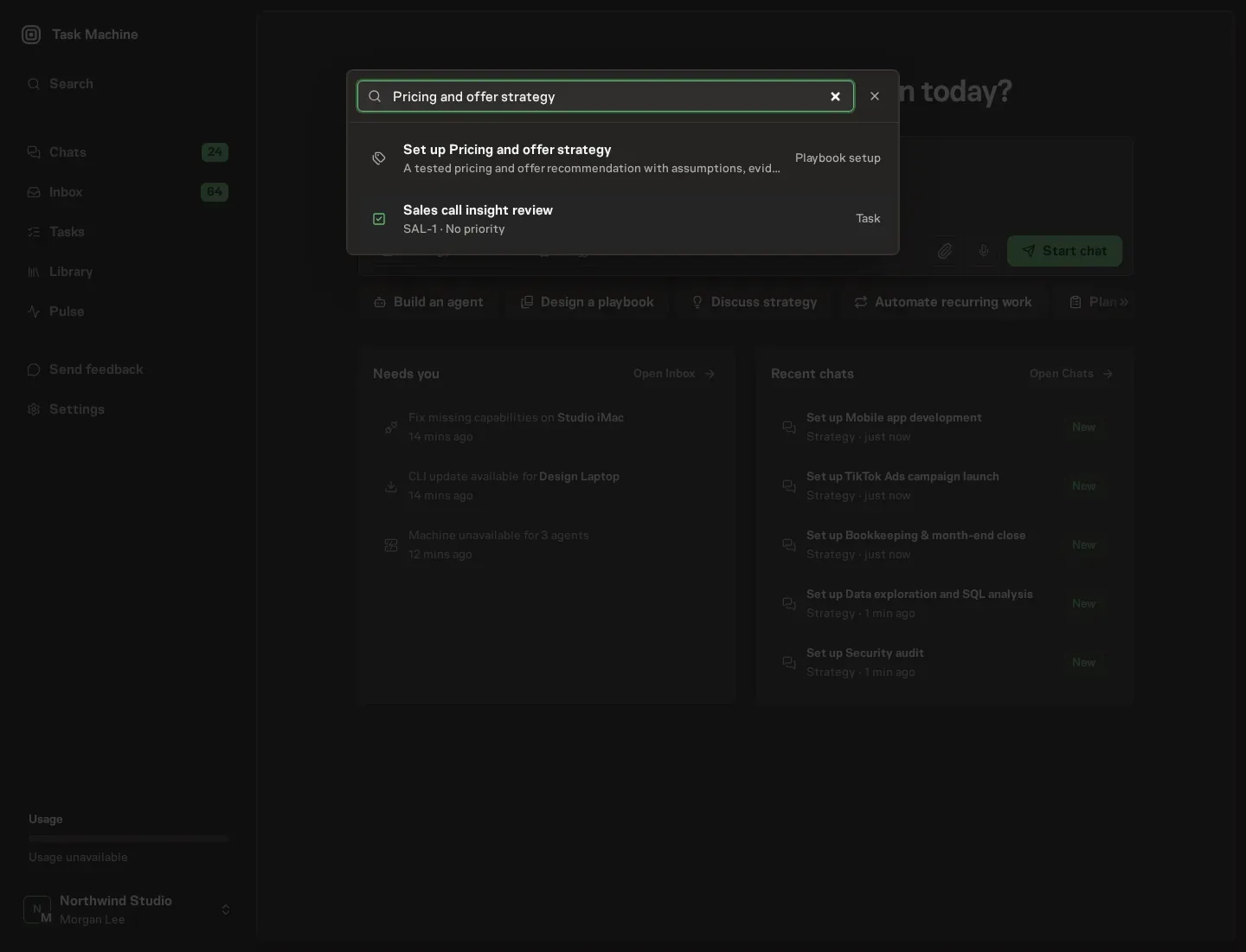
Open Search in your workspace and enter "Pricing and offer strategy". The command center lists Set up Pricing and offer strategy under Playbook setup.
2. Start the conversation
Choose Set up Pricing and offer strategy. Task Machine opens a dedicated Chat with the Playbook card and an editable, unsent request. Read the intended job and outcome. Add your situation and send it when ready. Opening the draft does not install anything or start work. This walkthrough uses settings that require approval of the proposed Playbook.
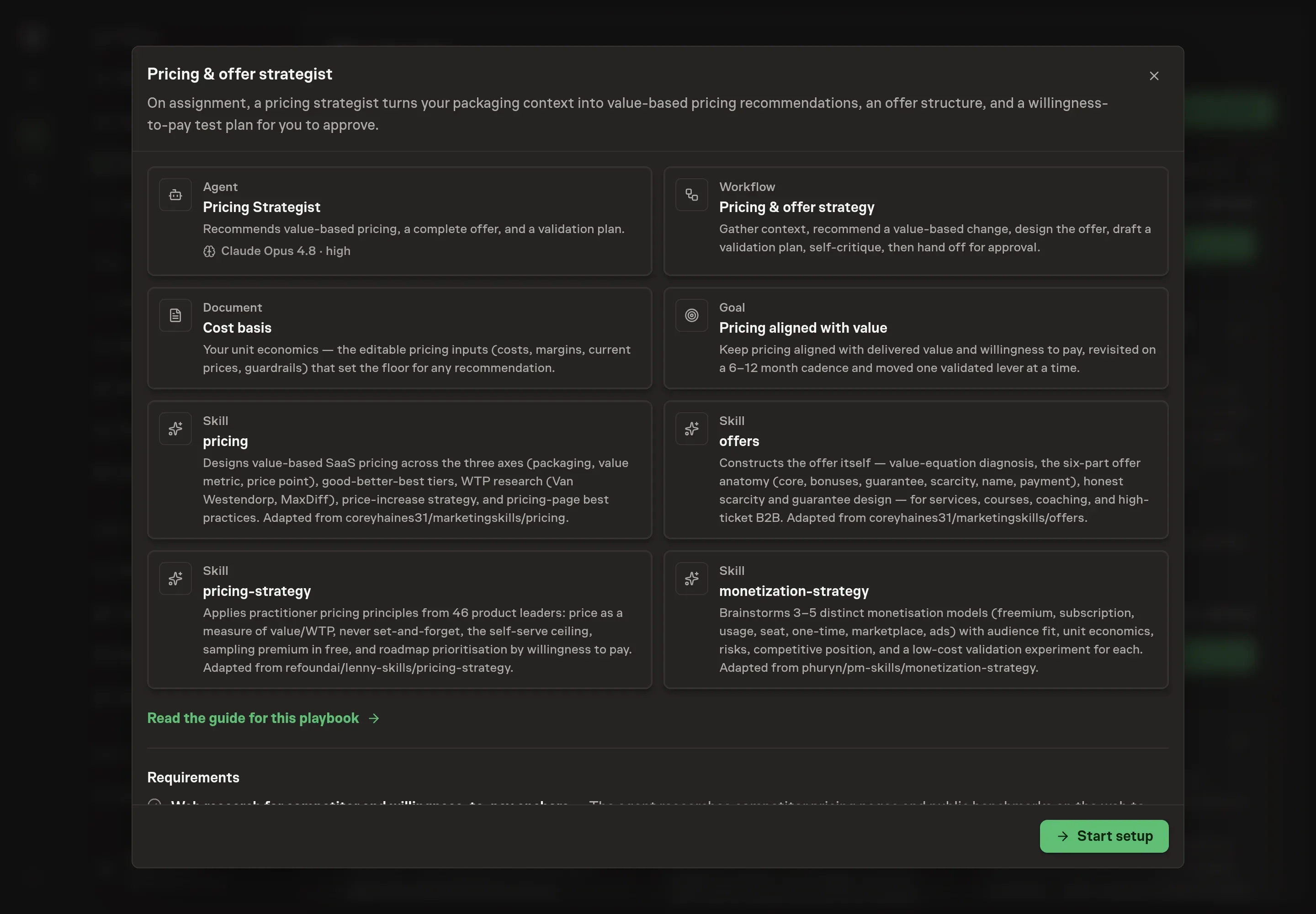
3. Agree the working brief
Use Chat to agree the inputs, expected output and limits before asking for a proposal. The Agent needs product or service, customer segment, current pricing, and pricing questions. Write the decision question plainly, such as whether to move from project pricing to a monthly retainer, change the value metric, or test a higher package.
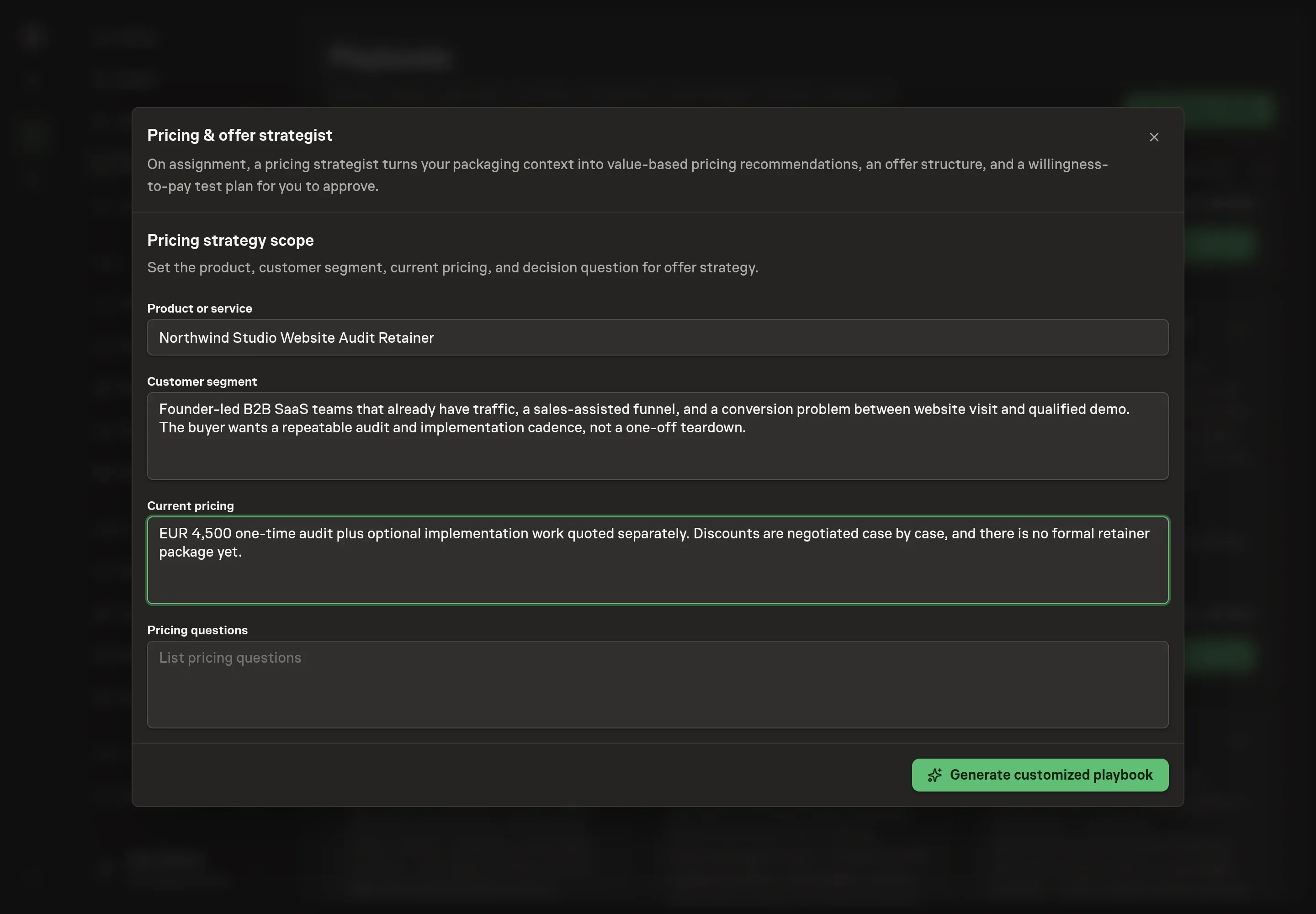
4. Review the proposed Playbook
Ask the Agent to generate the Playbook from the agreed brief. Open its proposal in Chat and check the instructions and resources it will install, which carry more detail than the conversational summary. Confirm the workflow includes cost-basis checks, a validation plan, self-critique, and human approval before any pricing change. Ask for a revised proposal if anything is missing or changes the job.
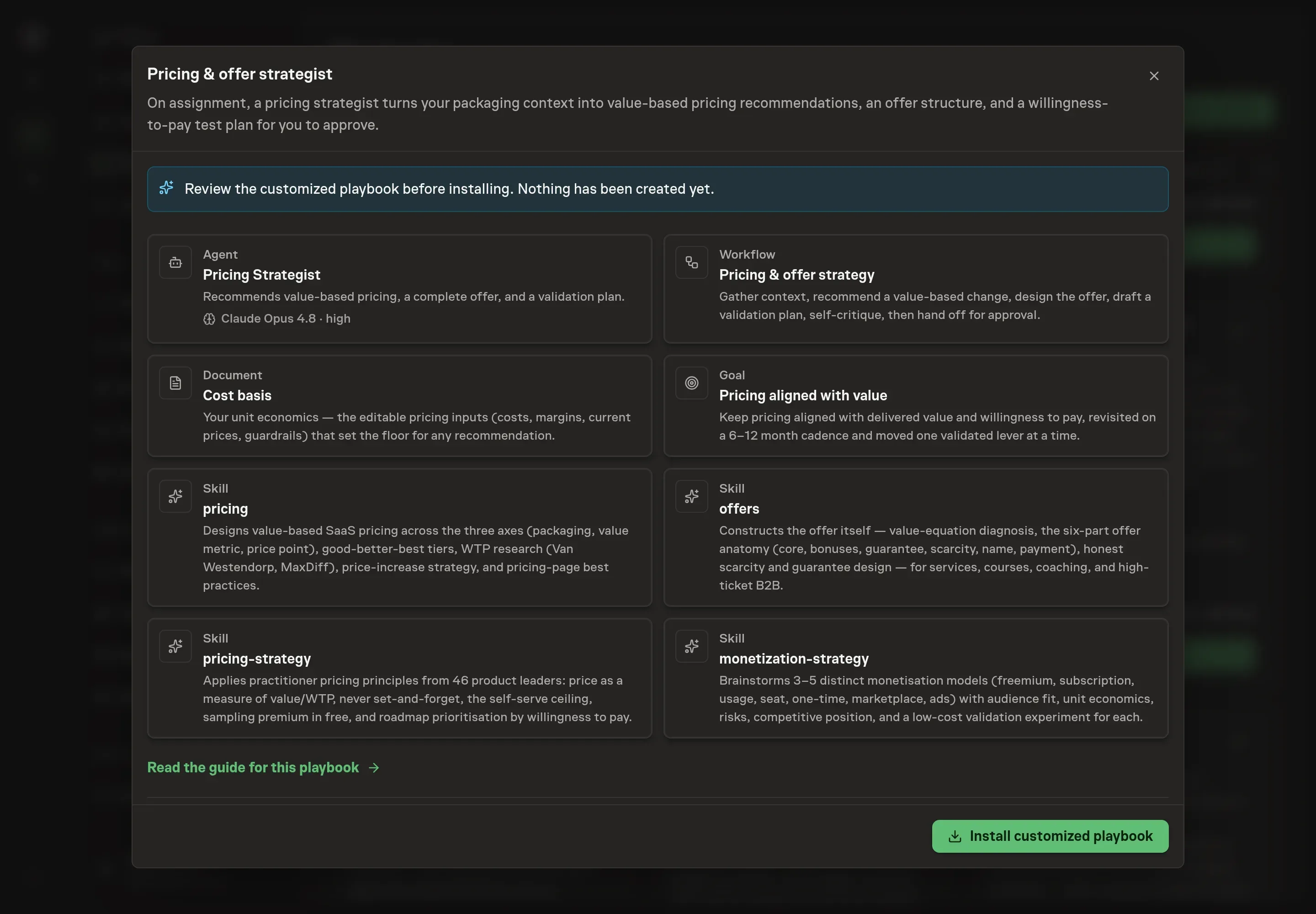
5. Approve and prepare the first work
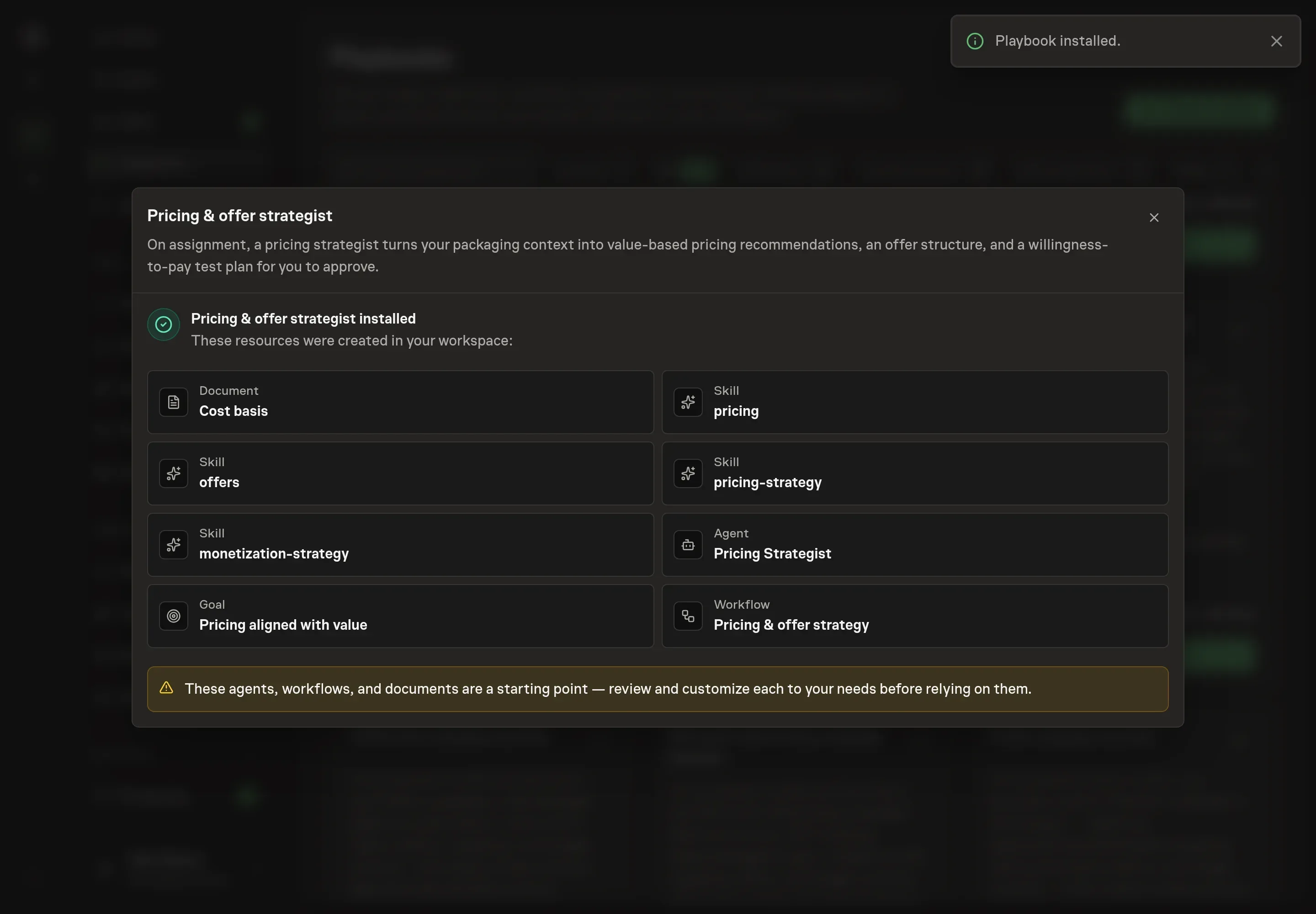
Choose Approve on the proposal in Chat when the configuration matches your brief. Task Machine installs that reviewed configuration. The approved item retains its review details. If your autonomy settings allow direct installation, this approval may not be required. Check the resulting configuration in that case too.
Complete any remaining secure service setup from the installation details in Chat. Inbox keeps those setup items available if you return later. Prepare the source documents and inputs before starting the first Task or Workflow. Installation does not authorize sending, publishing or changing an external service beyond the boundaries you agreed.
What good looks like
A pricing recommendation is ready to review when three checks pass:
- Only one lever moved. Packaging, value metric, or price point changes in isolation so the result can be measured.
- The floor is protected. Every package clears cost to serve, margin target, and discount guardrails, or the exception is explicit.
- The test has decision criteria. The plan states what signal will confirm, revise, or reject the recommendation.
Common questions
Should pricing be based on cost? Cost sets the floor, not the ceiling. The recommendation should be defended by value and willingness to pay, then checked against cost and margin.
Can this design a services offer as well as SaaS tiers? Yes. The playbook includes both pricing and offer skills. For SaaS, tiers and value metrics usually matter most. For services and high-ticket B2B, offer anatomy matters more.
Will the playbook change prices automatically? No. It drafts a recommendation and validation plan for approval. Live pricing changes stay with the human owner.
What if there are no willingness-to-pay signals yet? The agent should say so and propose a validation plan, such as interviews, Van Westendorp questions, MaxDiff, a pilot, or a pricing-page test.