How to Recruit UGC Creators
A practical guide to sourcing UGC creators, qualifying fit, drafting outreach, and approving spend before any paid collaboration.

Founder, Task Machine
UGC creator recruitment is the process of finding creators who can make native product content, qualifying whether their audience and style fit the offer, and moving the right people into paid collaboration. It spans discovery, scoring, outreach, content briefs, rate planning, usage rights, disclosure language, and budget approval.
The job is worth systematizing because creator sourcing looks cheap until it becomes scattered. A low-fee video from the wrong audience is wasted spend. A creator with good engagement but unclear rights can create rework later. A DM that mentions a rate before approval can commit the team before anyone has checked the budget.
Why creator recruitment gets expensive
Most small teams start with a spreadsheet and a few platform searches. The list grows quickly, but the quality signal is uneven. Follower count is easy to collect. Audience fit, comment quality, content style, reliability, disclosure readiness, and likely rate are harder to judge consistently.
The cost shows up in the shortlist. Off-ICP creators pass through because they look active. Incentives are not capped. Usage rights are not discussed early. A few individual deals seem harmless, then the worst-case spend no longer fits the campaign cap. The process needs a repeatable qualification bar before anyone talks money.
What the manual process looks like
A disciplined recruitment cycle usually has six steps:
- Define the creator profile, product or offer, campaign brief, compensation range, disclosure rules, usage-rights needs, and budget cap.
- Source candidates on TikTok, Instagram, and YouTube through hashtag and sound mining, competitor-creator discovery, niche search, and prior category collaborations.
- Score each creator on audience fit, content fit, authenticity, reliability, and rate realism.
- Build a shortlist, draft personalized outreach, and prepare one-page content briefs for each creator.
- Build the rate plan with fixed fees, capped performance incentives, usage rights, and worst-case spend against the cap.
- Review fit and spend, approve the plan, then send rate-stating outreach only after approval.
The manual version is not intellectually hard. It fails when the team treats discovery, qualification, outreach, and money as separate tasks with no single approval point.
What an agent can automate
The UGC Creator Recruitment playbook turns that cycle into a controlled workflow:
- Source from the right places. The agent works through TikTok, Instagram, and YouTube in the browser, using hashtags, sounds, competitor creators, category creators, and niche YouTube searches. Until browser access is ready, it can work from attached creator lists.
- Qualify beyond follower count. It scores audience fit, content fit, authenticity, reliability, and rate realism. Engagement quality matters more than raw reach.
- Separate UGC and influencer modes. UGC focuses on many small creators and fixed-fee video work, usually in the $15 to $30 per video band from the bundle. Influencer or YouTuber mode uses fewer creators and bespoke deal shapes.
- Draft without premature commitments. The agent can write personalized outreach and one-page briefs, but pre-approval outreach must not state a rate or commit to pay.
- Calculate worst-case spend. It sums fixed fees plus every capped incentive at its cap, then states the headroom against the named external-costs budget.
The human still owns who gets approved, whether the rate plan is acceptable, and whether the brand should pursue the collaboration.
The guardrails that make it safe
Creator recruitment spends real money and creates public brand associations, so the workflow needs two gates. First, a Spend Reviewer independently checks creator fit, disclosure language, usage-rights language, capped incentives, and worst-case spend. Second, a human approves before any rate is agreed or payment is committed.
The approval boundary changes the outreach. Before approval, the agent can qualify interest and fit. After approval, it can send rate-stating outreach that matches the approved plan. The paid-collab tracker records status, proposed fee, incentive cap, deliverable, approval reference, and actual spend so each cycle remains auditable.
Set it up in Task Machine
The UGC creator recruitment playbook provides a starting point for the method above. You need an active Task Machine workspace with Chat, workspace-management and Playbook-installation access (workspace owners have it). Browser access to TikTok, Instagram, and YouTube is not required up front. Until it is ready, the workflow can work from attached creator lists and exports.
1. Find the playbook
Open Search in your workspace and enter "UGC creator recruitment". The command center lists Set up UGC creator recruitment under Playbook setup.
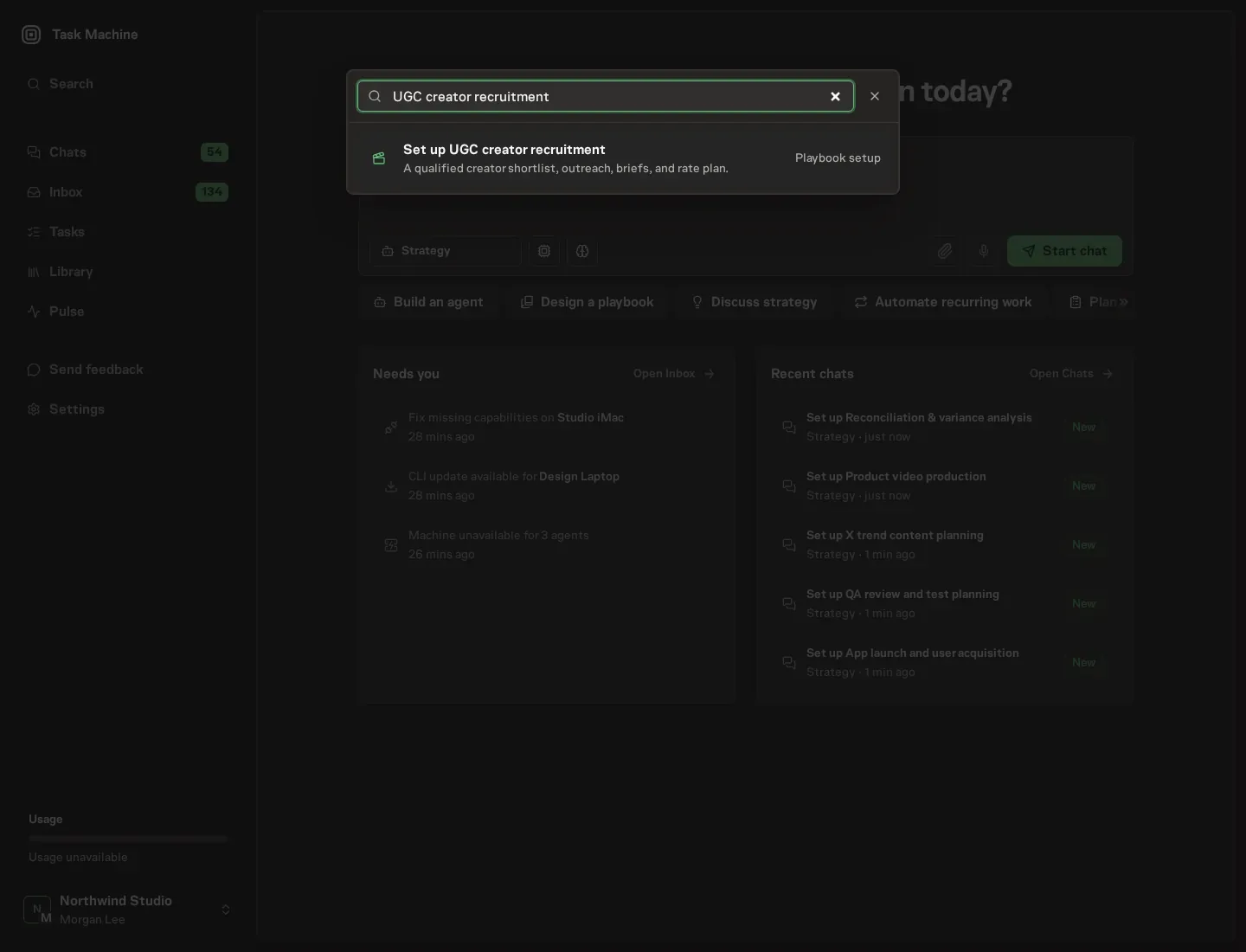
2. Start the conversation
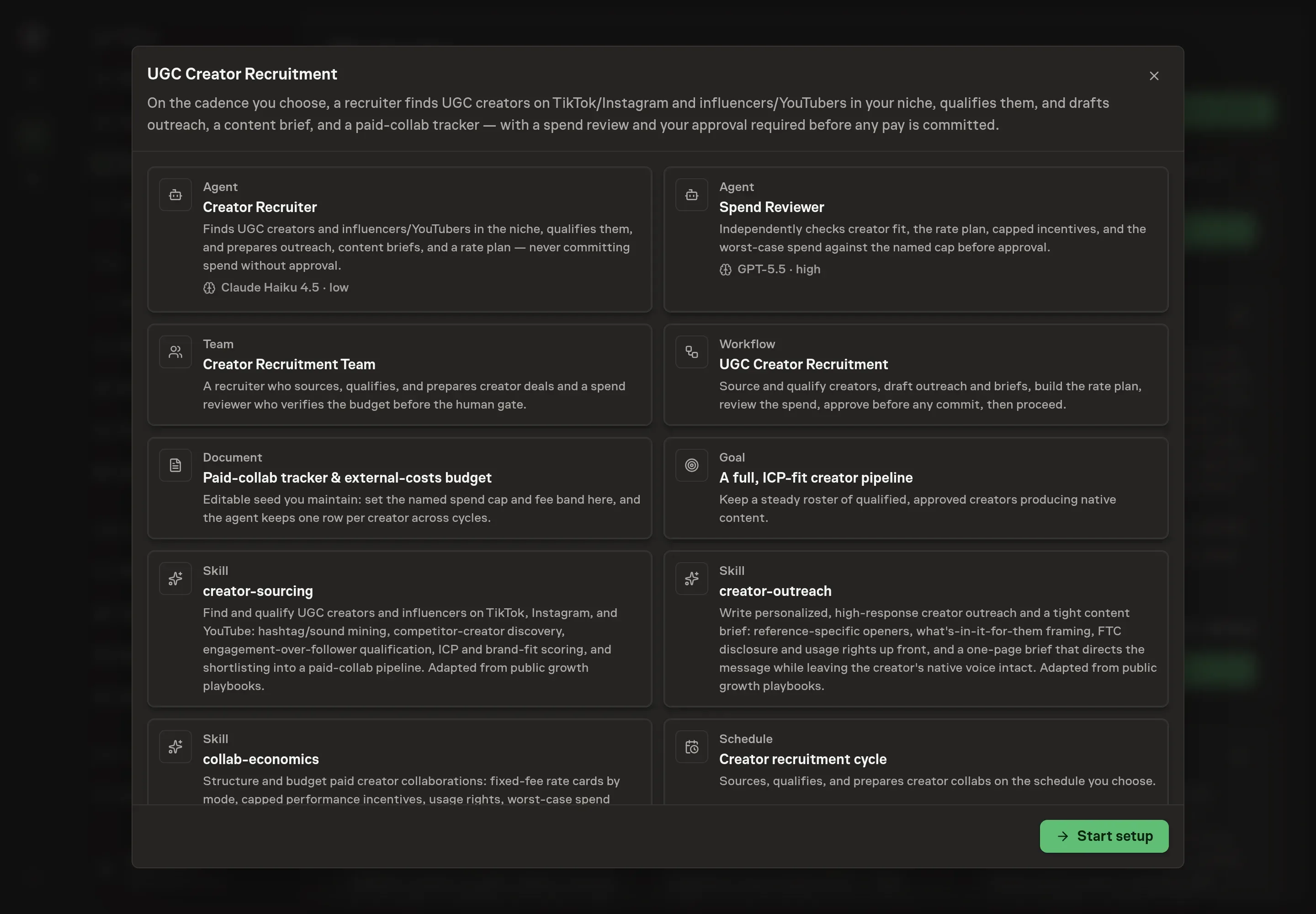
Choose Set up UGC creator recruitment. Task Machine opens a dedicated Chat with the Playbook card and an editable, unsent request. Read the intended job and outcome. Add your situation and send it when ready. Opening the draft does not install anything or start work. This walkthrough uses settings that require approval of the proposed Playbook.
3. Agree the working brief
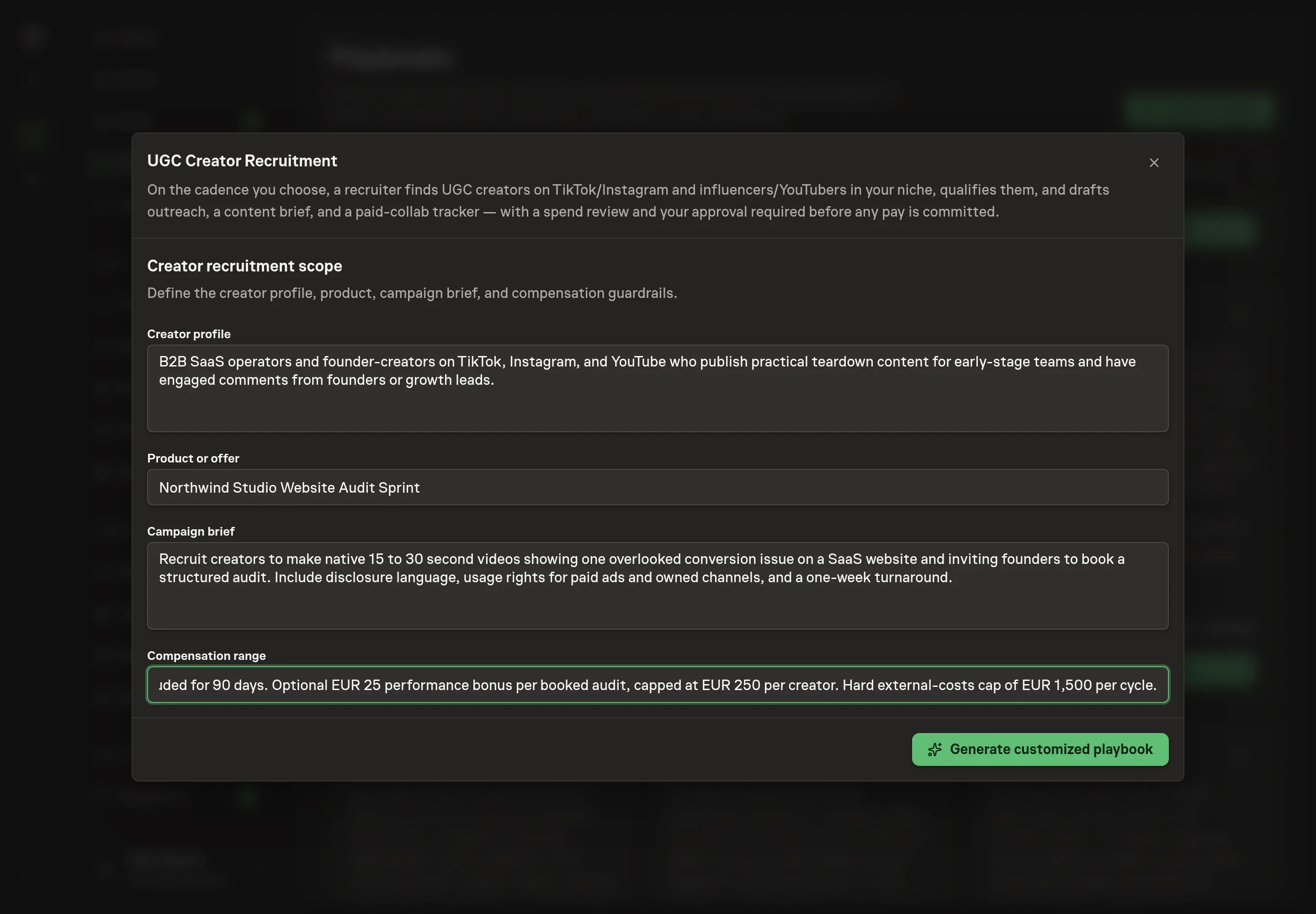
Use Chat to agree the inputs, expected output and limits before asking for a proposal. The Agent needs the creator profile, product or offer, campaign brief, and compensation range. Use these answers to encode who is in scope, what content the campaign needs, and the money boundary the reviewer must check.
4. Review the proposed Playbook
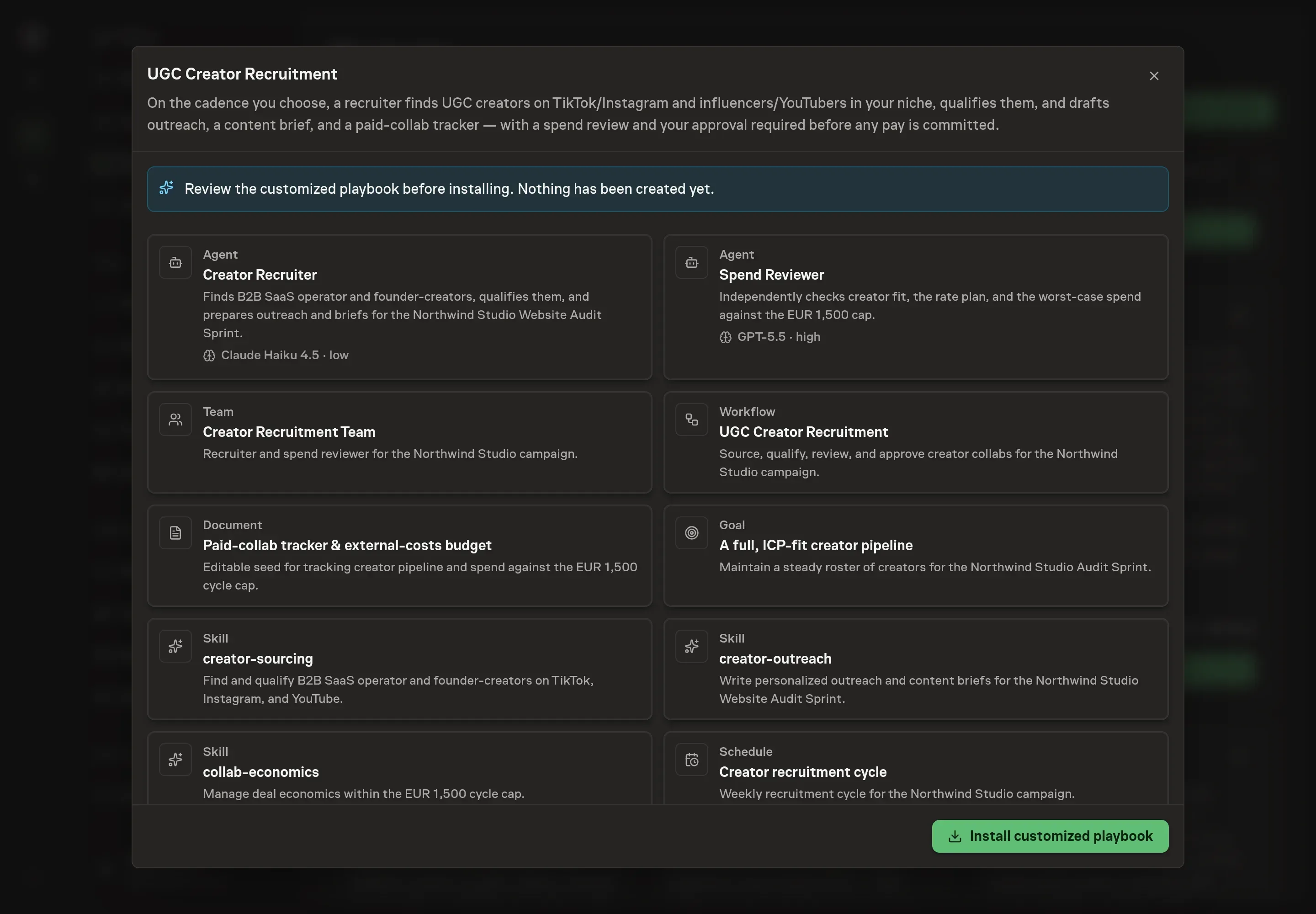
Ask the Agent to generate the Playbook from the agreed brief. Open its proposal in Chat and check the instructions and resources it will install, which carry more detail than the conversational summary. Review the generated records for the approval boundary: no rate should be agreed and no payment should be committed before approval. Ask for a revised proposal if anything is missing or changes the job.
5. Approve and prepare the first work
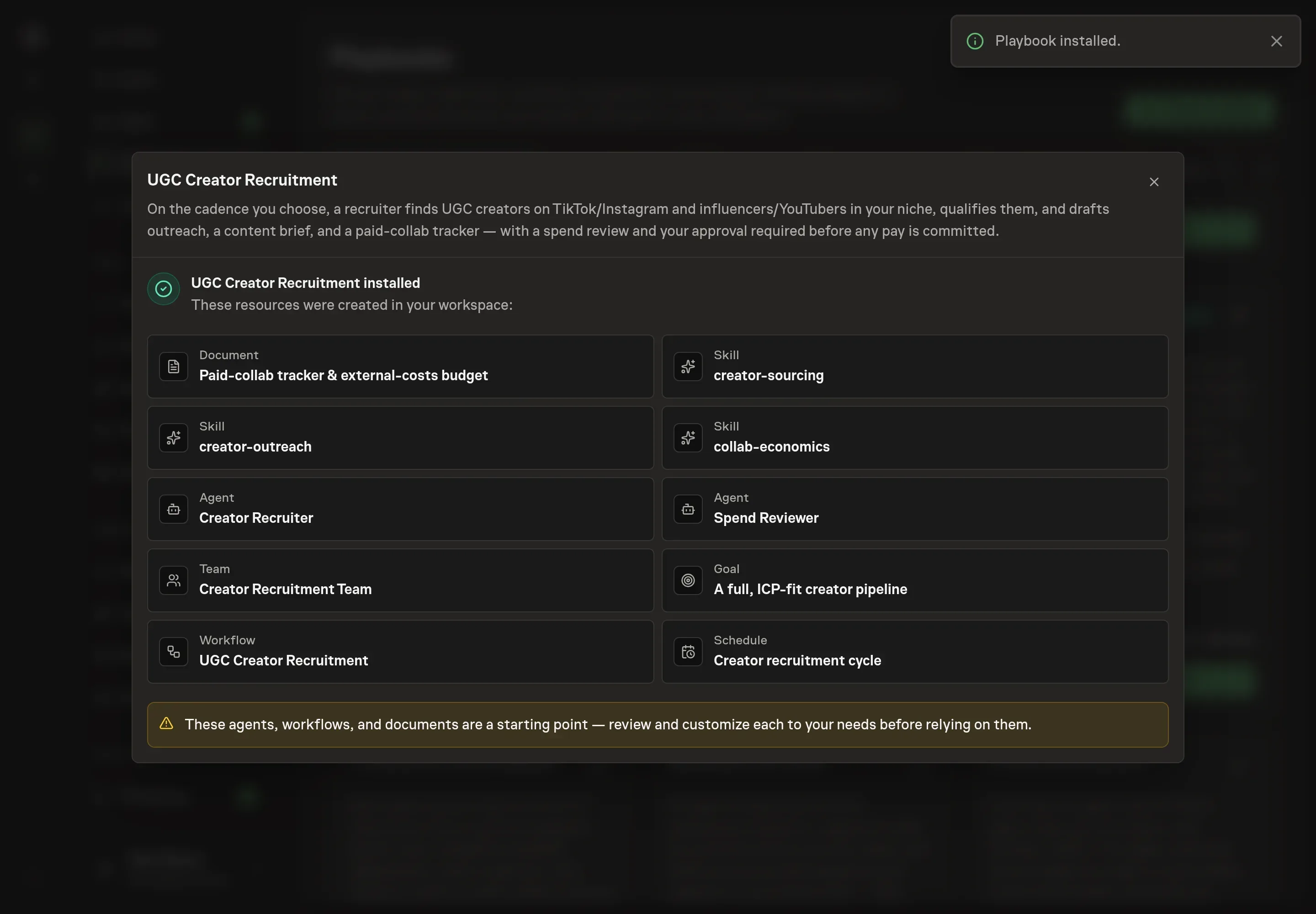
Choose Approve on the proposal in Chat when the configuration matches your brief. Task Machine installs that reviewed configuration. The approved item retains its review details. If your autonomy settings allow direct installation, this approval may not be required. Check the resulting configuration in that case too.
Complete any remaining secure service setup from the installation details in Chat. Inbox keeps those setup items available if you return later. Prepare the source documents and inputs before starting the first Task or Workflow. Installation does not authorize sending, publishing or changing an external service beyond the boundaries you agreed. Confirm each schedule's cadence and timezone, and resolve any pending schedule setup before it starts. A readback must wait for its agreed observation window and source data. Check the reviewed tracker or results document before the first cycle so evidence and human decisions have a durable home.
What good looks like
Three signals show the recruitment process is working:
- Shortlists are ICP-fit. Candidates pass audience fit, content fit, authenticity, reliability, and rate realism before they reach approval.
- Spend is bounded. The approval request states fixed fees, capped incentives, worst-case spend, and headroom against the external-costs budget.
- Outreach respects the gate. Pre-approval drafts do not state a rate. Rate-stating outreach goes out only after the plan is approved.
Common questions
Can the agent agree rates with creators automatically? No. The workflow requires approval before any rate is agreed or payment is committed.
Does this only work for small UGC creators? No. The bundle supports UGC mode for fixed-fee creator volume and influencer or YouTuber mode for fewer, larger, bespoke collaborations.
What should the compensation range include? Include the fixed-fee band, any performance incentive structure, incentive caps, usage-rights expectations, and the external-costs budget cap.
How does the agent avoid low-quality creator lists? It scores fit and reliability, not only follower count. Off-ICP creators should be dropped before they reach the shortlist.