How to Run a Fundraising Process
A practical guide to preparing a raise package: narrative, deck, model, investor research, outreach, and approval.

Founder, Task Machine
A fundraising process is the coordinated work of turning a company's facts into an investor-ready package: source of truth, why-now narrative, pitch deck, financial model, target investor list, outreach drafts, and data-room checklist. The hard part is keeping every number and claim consistent while the material changes.
The work is worth systematizing because investors notice contradictions quickly. A deck metric that does not match the model, an outreach claim that does not match the data room, or a vague ask can weaken the meeting before the founder gets to the real conversation.
Fundraising prep scatters across parallel documents
Fundraising work often happens in parallel. One person edits the deck, another updates the model, someone researches investors, and outreach drafts move in a separate document. Each artifact can look reasonable on its own while disagreeing with the others.
The cost is fragile materials. The market slide uses a top-down number, the model assumes a different pricing plan, the email cites a traction metric that changed yesterday, and the data-room checklist is missing the document an investor will ask for next. A founder should spend time on judgment and relationship work, not hunting conflicting numbers.
What the manual process looks like
A disciplined raise preparation loop has six parts:
- Establish one source of truth for traction, pricing, revenue assumptions, raise size and instrument, use of funds, team bios, milestones, and timelines.
- Build the why-now narrative before the deck: insight, inevitability, urgency, why-you, and opportunity.
- Draft the pitch deck on a standard sequence: title, problem, solution, why now, market, product, traction, business model, competition, team, and ask.
- Build the 3-statement model with cohort-based revenue, cost layers, headcount, burn, runway, and three scenarios.
- Research thesis-fit investors, warm paths, stage fit, check size, relevant portfolio, and dated next steps.
- Draft personalized cold and warm outreach, then run a consistency check across every number before anything goes out.
The raise package is not ready until the deck, model, investor CRM, and emails agree.
What an agent can automate
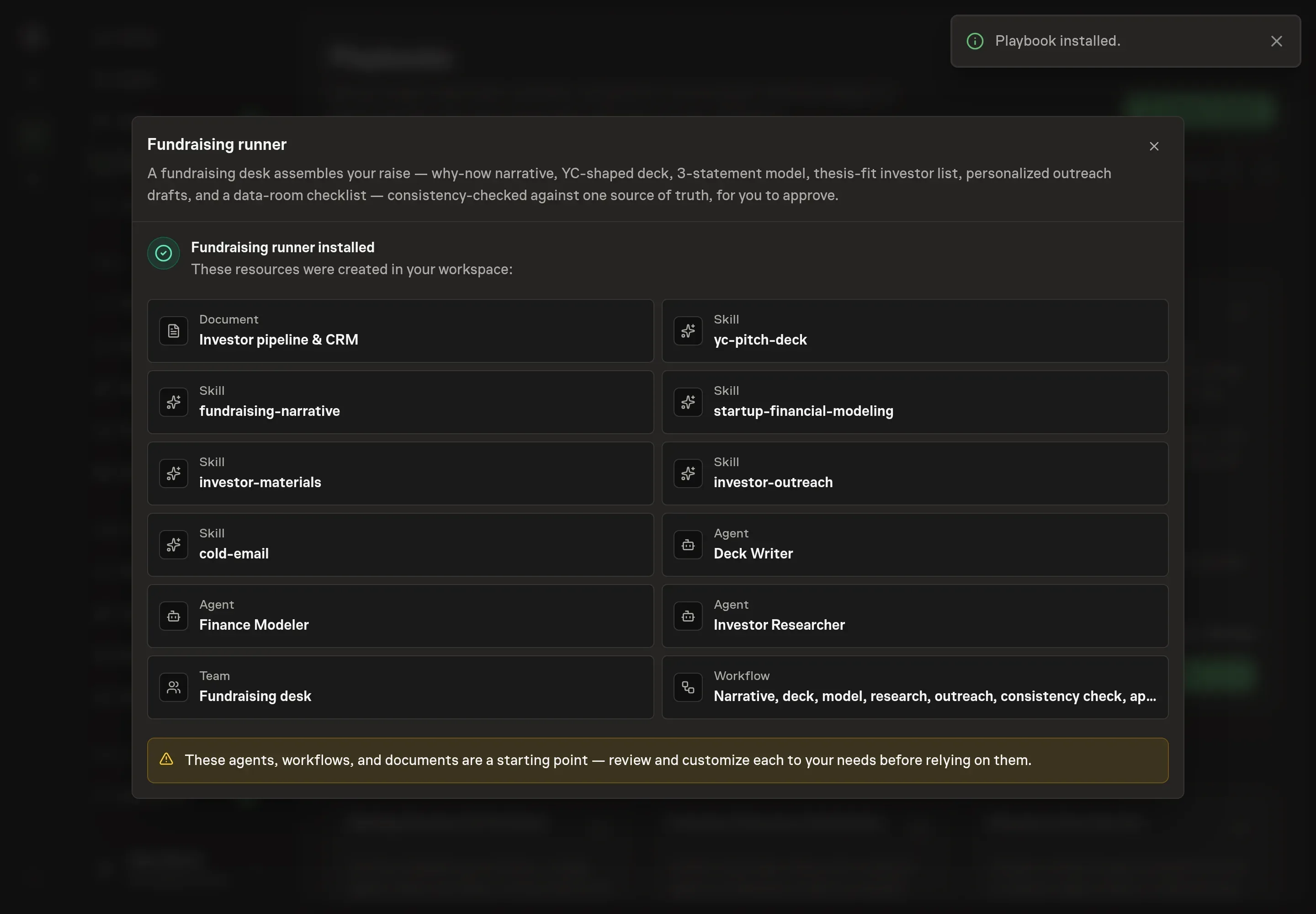
The fundraising runner uses a small desk of agents, each with a defined role:
- Deck writer. Establishes the source of truth, writes the why-now narrative, drafts the YC/Sequoia-shaped deck, coordinates the desk, and enforces consistency before approval.
- Finance modeler. Builds the cohort-based 3-statement model with COGS, sales and marketing, R&D, G&A, headcount, burn, runway, and conservative, base, and optimistic scenarios.
- Investor researcher. Researches funds and partners from public sources, scores thesis fit, finds warm paths, maintains the investor pipeline, and drafts personalized cold and warm outreach.
- Consistency check. The final pass cross-checks the deck, model, and emails against the single source of truth. Any conflicting number is fixed before the package reaches approval.
The agents prepare the raise package. They do not send investor emails or grant data-room access without human approval.
The guardrails that make it safe
Fundraising automation needs a hard boundary around investor-facing communication. A generic email, invented investor fit, or inconsistent metric can create real relationship damage.
The safe shape starts with source-of-truth control and ends with approval. Public investor research must cite real pages. Outreach drafts that lack real personalization are marked unfinished. Every metric in the deck, model, and email copy must match the same facts. The human approves before anything reaches investors.
Set it up in Task Machine
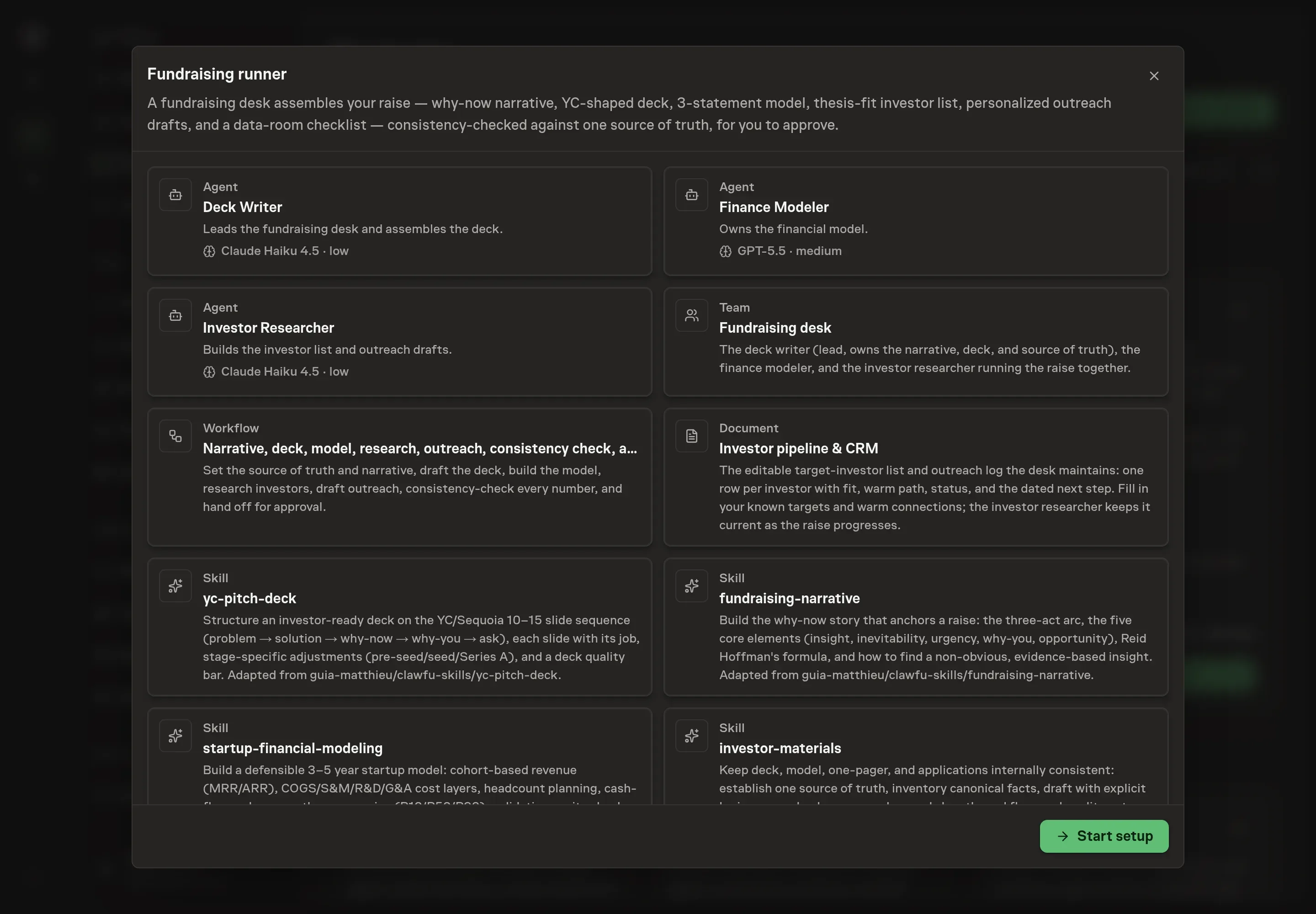
The Fundraising outreach playbook provides a starting point for the method above. You need an active Task Machine workspace with Chat, workspace-management and Playbook-installation access (workspace owners have it). Email and investor CRM access can be authorized later. Until then, the desk drafts everything for manual sending and tracking.
1. Find the playbook
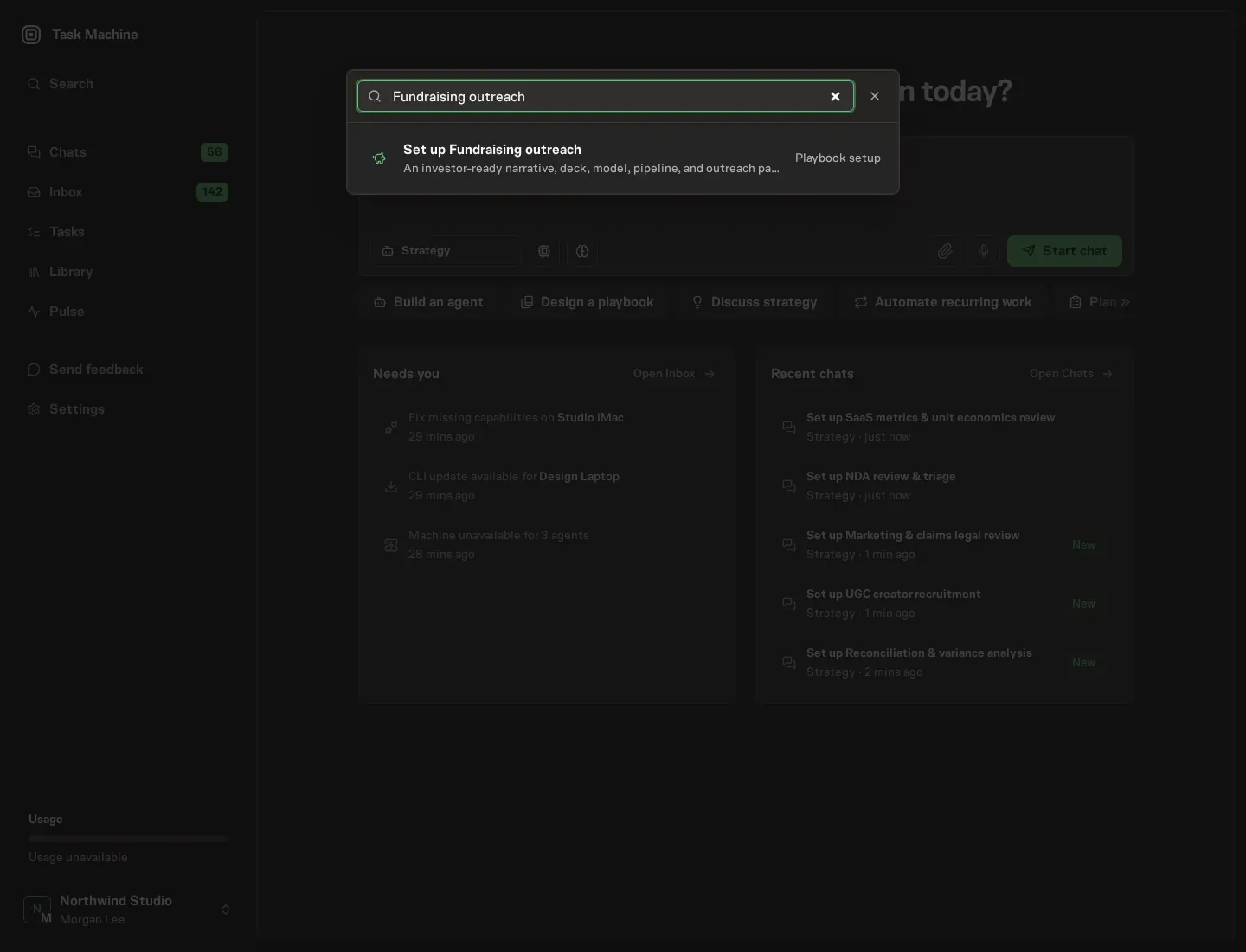
Open Search in your workspace and enter "Fundraising outreach". The command center lists Set up Fundraising outreach under Playbook setup.
2. Start the conversation
Choose Set up Fundraising outreach. Task Machine opens a dedicated Chat with the Playbook card and an editable, unsent request. Read the intended job and outcome. Add your situation and send it when ready. Opening the draft does not install anything or start work. This walkthrough uses settings that require approval of the proposed Playbook.
3. Agree the working brief
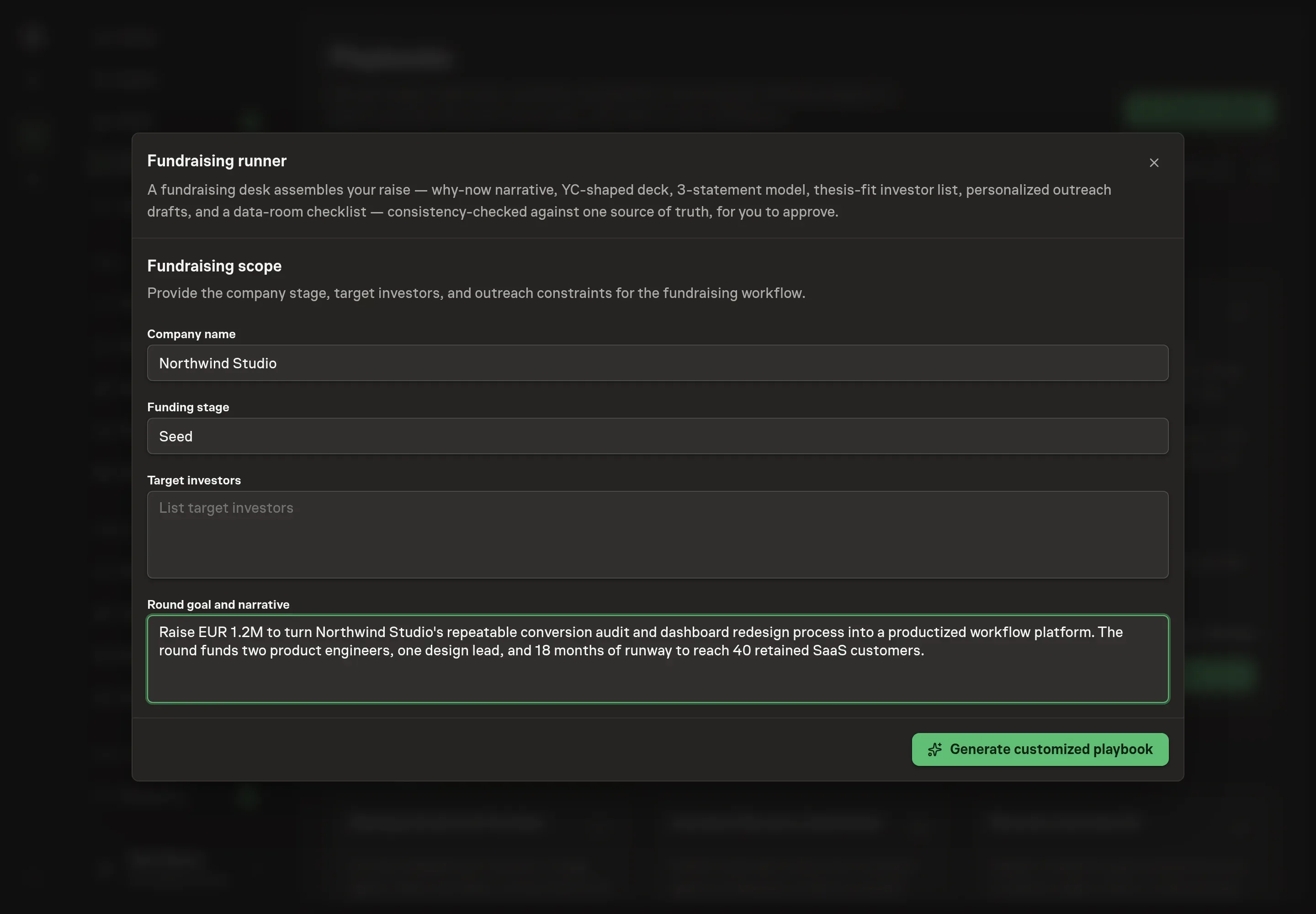
Use Chat to agree the inputs, expected output and limits before asking for a proposal. The Agent needs the company name, funding stage, target investors, and round goal and narrative. Treat these answers as the seed of the source of truth: stage, amount, use of funds, milestone, and the investor types worth prioritizing.
4. Review the proposed Playbook
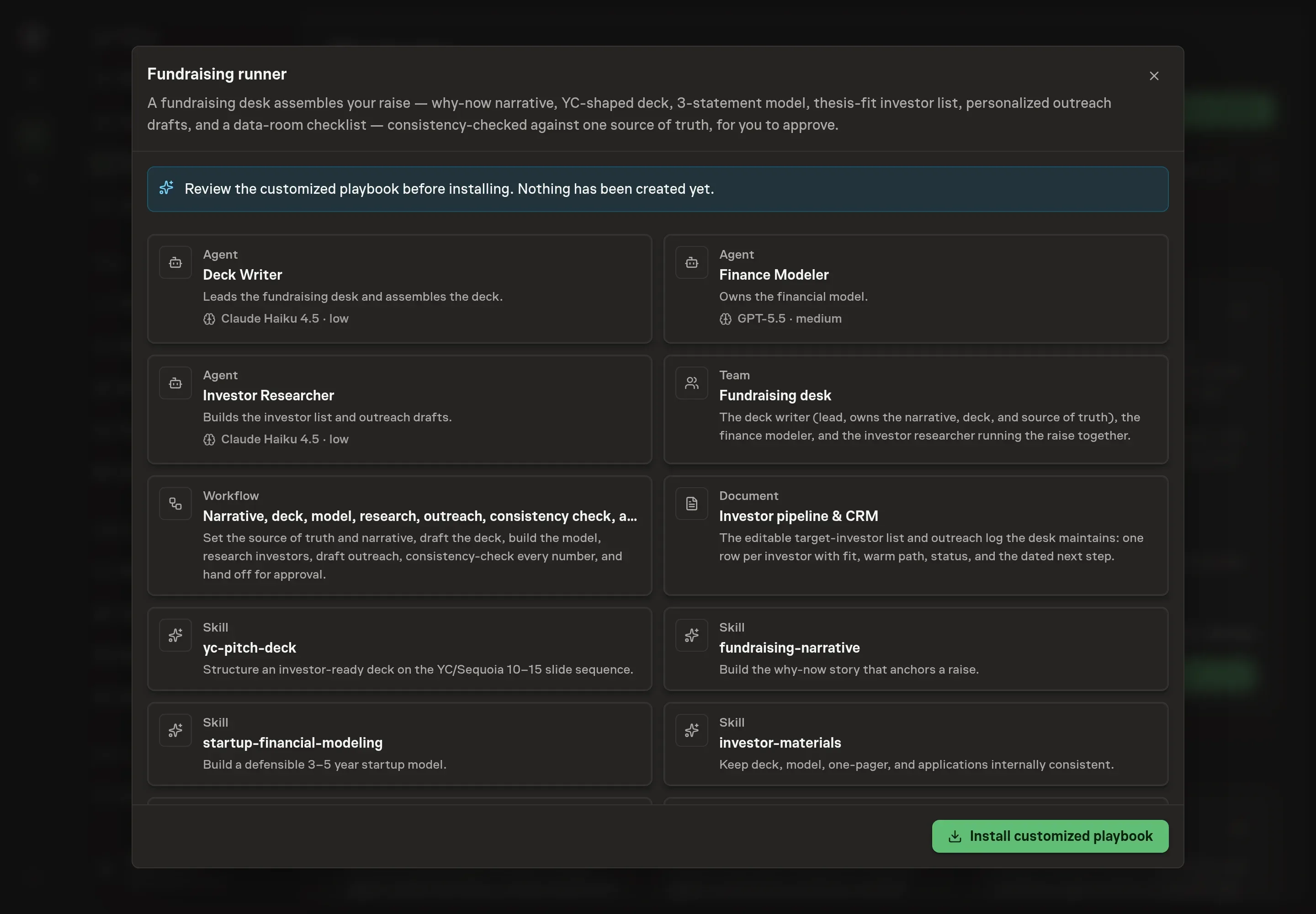
Ask the Agent to generate the Playbook from the agreed brief. Open its proposal in Chat and check the instructions and resources it will install, which carry more detail than the conversational summary. Review that the deck writer owns the source of truth, the finance modeler ties the model to the same facts, the investor researcher works from public sources, and the final consistency check happens before approval. Ask for a revised proposal if anything is missing or changes the job.
5. Approve and prepare the first work
Choose Approve on the proposal in Chat when the configuration matches your brief. Task Machine installs that reviewed configuration. The approved item retains its review details. If your autonomy settings allow direct installation, this approval may not be required. Check the resulting configuration in that case too.
Complete any remaining secure service setup from the installation details in Chat. Inbox keeps those setup items available if you return later. Prepare the source documents and inputs before starting the first Task or Workflow. Installation does not authorize sending, publishing or changing an external service beyond the boundaries you agreed. Check the reviewed tracker or results document before the first cycle so evidence and human decisions have a durable home.
What good looks like
A ready raise package has three checks:
- One source of truth. Every traction number, model assumption, ask, milestone, and title matches across the deck, model, CRM, and emails.
- Investor fit is specific. Each target has a stage fit, thesis reason, relevant portfolio or public signal, warm path if one exists, status, and dated next step.
- Outreach waits for approval. Cold emails, warm intro blurbs, follow-ups, and post-meeting updates are drafts until the human approves them.
Common questions
Can the desk send investor emails automatically? No. The desk drafts investor-facing messages and routes them to approval. Sending remains a human decision.
What happens if an investor draft is not personalized enough? The investor researcher should mark it as unfinished rather than pretending it is ready. A generic email is a failed artifact.
Does the financial model need to be perfect before outreach? It needs to be consistent with the deck and defensible for the stage. The package should not cite numbers the model cannot support.
What should go into the investor pipeline before the first run? Add known target investors, warm connections, stage constraints, thesis notes, data-room status, outreach restrictions, and dated next steps.